

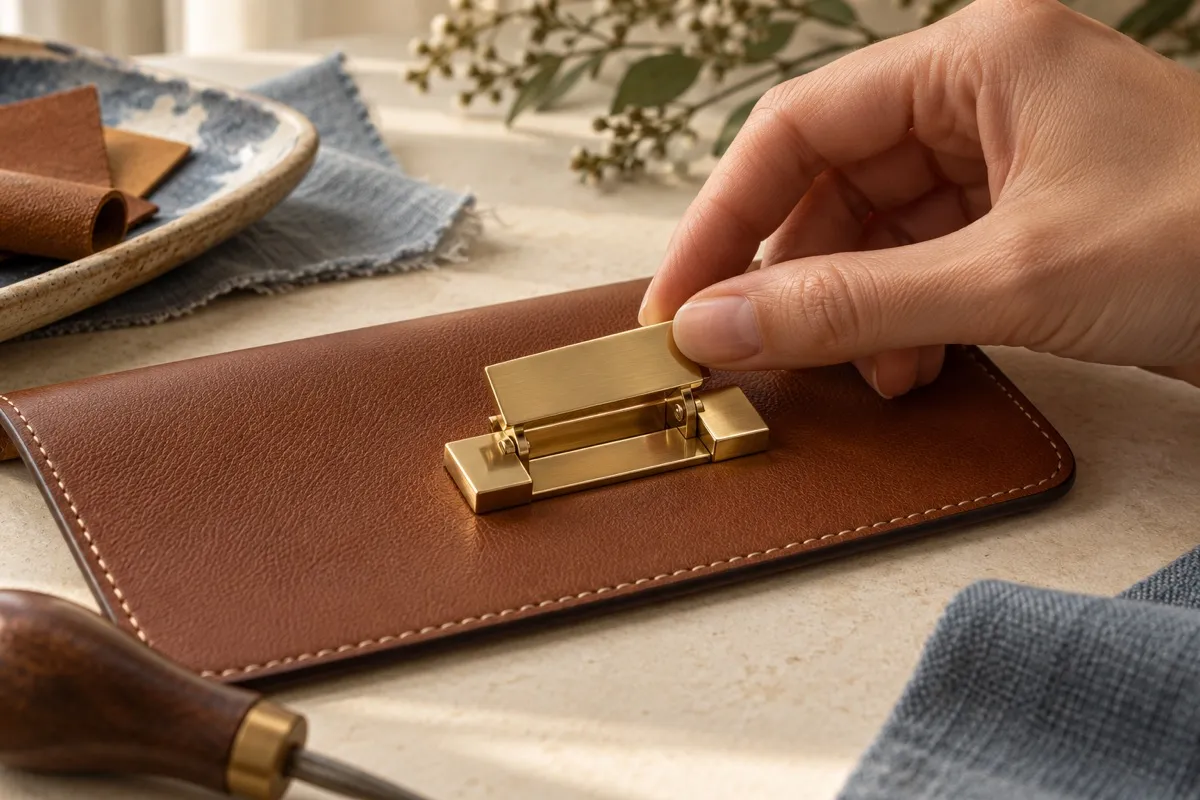
The Constance gives a letter something to do. Its H does not simply announce a name: it fastens the bag. That small distinction is a rewarding starting point. Look at the closure as a piece of working design, rather than a badge and the relationship between the flap, the hand and the bag begins to come into focus.[1]
A beginning with two published dates
Hermès places the commission in 1967, when Jean-Louis Dumas asked a designer to create a bag. In the house’s account, the designer was expecting a child and named the result after her daughter, Constance. The official page leaves the designer unnamed; Christie’s identifies her as Catherine Chaillet.[1][3]
Christie’s current overview also gives 1959 as the introduction year, in conflict with the house’s 1967 story and published chronology. These dates cannot safely be turned into a sequence of prototype and launch: neither account supplies that explanation. The house’s date is the anchor here, while the discrepancy remains open.[1][3][2]
The clasp and the moving strap
Hermès describes concealed springs beside the bar attached to the flap. The H is therefore both a recognizable outline and the visible part of a mechanism. Its two upright strokes and crossbar give the eye an orderly centre; opening the bag turns that graphic arrangement into an action.[1]
The sliding strap offers another kind of movement. It can extend to carry the bag against the hip or double for a shorter position on the shoulder. A change in carrying height alters how the same object sits beside the wearer, without requiring a second bag.[1]
It is worth looking at these two devices together. The clasp gathers attention into one place; the strap changes the bag’s relationship to the body. One makes the front legible, the other makes the design adaptable. This is a way of reading the object, not a reconstructed account of what its designer said in the studio.[1]
A stable form, a different surface
The house’s Constance Marble Silk presentation introduces marbled silk and a technique maintained in Japan. Here, color can interrupt the calm of the form without removing the recognizable fastening. The surface becomes a field of variation around a firm visual centre.[1]
That later interpretation should not be mistaken for the original specification. Nor does its presence establish a reissue date. The enduring pleasure of the Constance lies in looking between these layers: the historical commission, the useful mechanisms and the possibilities opened by a different surface. A familiar letter is only the beginning.[1]
Sizes, leathers and resale prices are on the Constance profile →
Sources & further reading
- Sac Constance · HermèsUn fermoir architecturé · Opening paragraph · La liberté en bandoulière · Constance Marble SilkConsulted 2026-10-27
- 2014 Annual Report · Hermès InternationalPrinted p. 17: 1967 Constance bagConsulted 2026-10-27
- Hermès Constance bags · Christie’sOpening paragraphConsulted 2026-10-27