

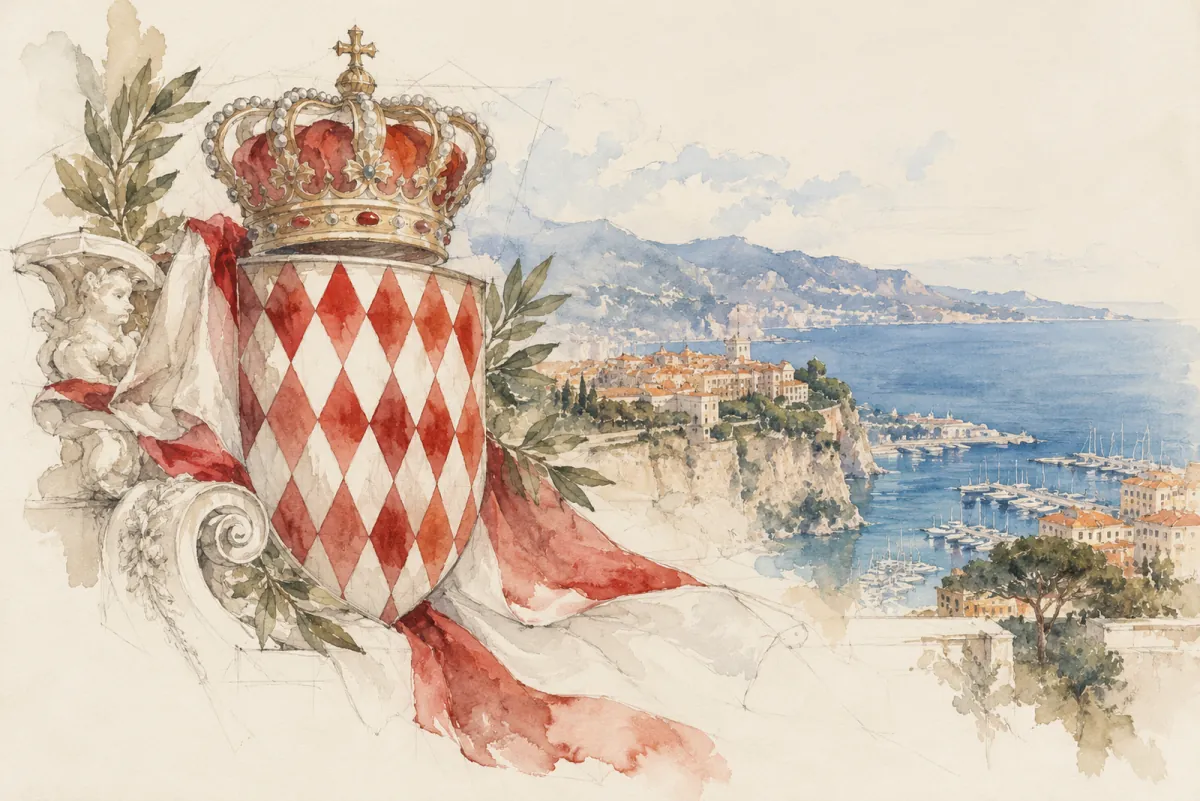
Armes de Monaco
Armes de Monaco and Deo Juvante Monaco appear together in an auction notice attributing a polychrome silk square to Hugo Grygkar.[1] Its ground is ivory.[1] This supports the connection between the two names beyond a specialist’s alternate-title statement.[1][2]
Carré de Paris connects the design with Monaco’s coat of arms and describes it as honoring Prince Rainier III and Grace Kelly.[2] That article reports an inaugural year of 1957 or 1958 and qualifies the artist attribution as commonly accepted.[2]
A separate page from the same specialist instead gives Grygkar and the dates 1959 and 1988.[3] Haynault explicitly identifies 1959 as the inaugural publication for a 90-centimeter silk-twill example with white ground and red border.[4]
The artist and title relationship are better supported than the release chronology.[1][4] The conflicting early years are retained rather than reconciled by selecting the most repeated date.[2][3][4]
Still open: The exact printed signature and inaugural release remain unconfirmed. The consulted records do not establish a complete reissue history or a documented annual-theme connection.
Biarritz
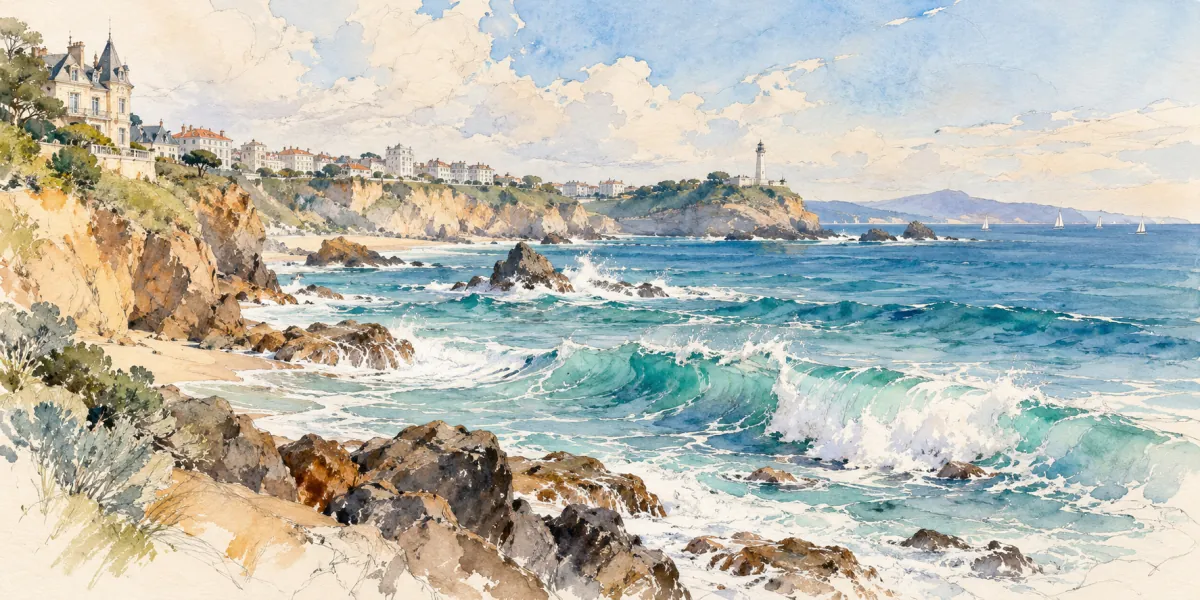
A Bonhams catalogue attributes Biarritz to Hugo Grygkar and dates the drawing’s creation to 1954.[5] Its printed silk example has a peach ground and measures 90 centimeters square.[5]
Le Grenier d’Amatxi identifies the fishing harbor, the Haille tower, a medallion of Empress Eugénie and the Villa Eugénie among the depicted landmarks.[6] It relates the border to the railings of the Hôtel du Palais.[6]
The same specialist links the 1954 scarf to the opening of the Biarritz boutique and reports a special reissue in 2000.[6] These circumstances remain attributed to the dealer because the consulted auction notice does not independently describe the commission or the later edition.[5][6]
The auction’s peach example and the specialist’s yellow, gray, pink and white example document different color treatments.[5][6] The published evidence supports the artist, subject and 90-centimeter format more firmly than it establishes the complete release history.[5][6]
Still open: The exact printed signature and inaugural release remain unconfirmed. The consulted records do not establish a complete reissue history or a documented annual-theme connection.
Cadrans anciens

Cadrans anciens is attributed to Hugo Grygkar in a Bonhams catalogue entry for a sky-blue printed-silk square.[7] The catalogue associates the design with 1948 and records dimensions of 75 by 75 centimeters.[7]
The entry cites Geneviève Fontan’s Carrés d’Art IV, page 59.[7] That bibliographic reference identifies a further source but is not treated as a separately consulted book.[7]
Le Grenier d’Amatxi describes a different silk example at 90 centimeters square in white, orange and black.[8] It also reports 1948.[8] The agreement is useful, although neither description reproduces an original release record.[7][8]
The dimensional difference is retained as evidence about two objects rather than resolved by assuming a chronological change in format.[7][8] A neighboring auction lot concerns a belt with antique watch dials, but its proximity does not establish that the belt supplied the scarf’s design.[7]
Still open: The exact printed signature and inaugural release remain unconfirmed. The consulted records do not establish a complete reissue history or a documented annual-theme connection.
Chasse à courre
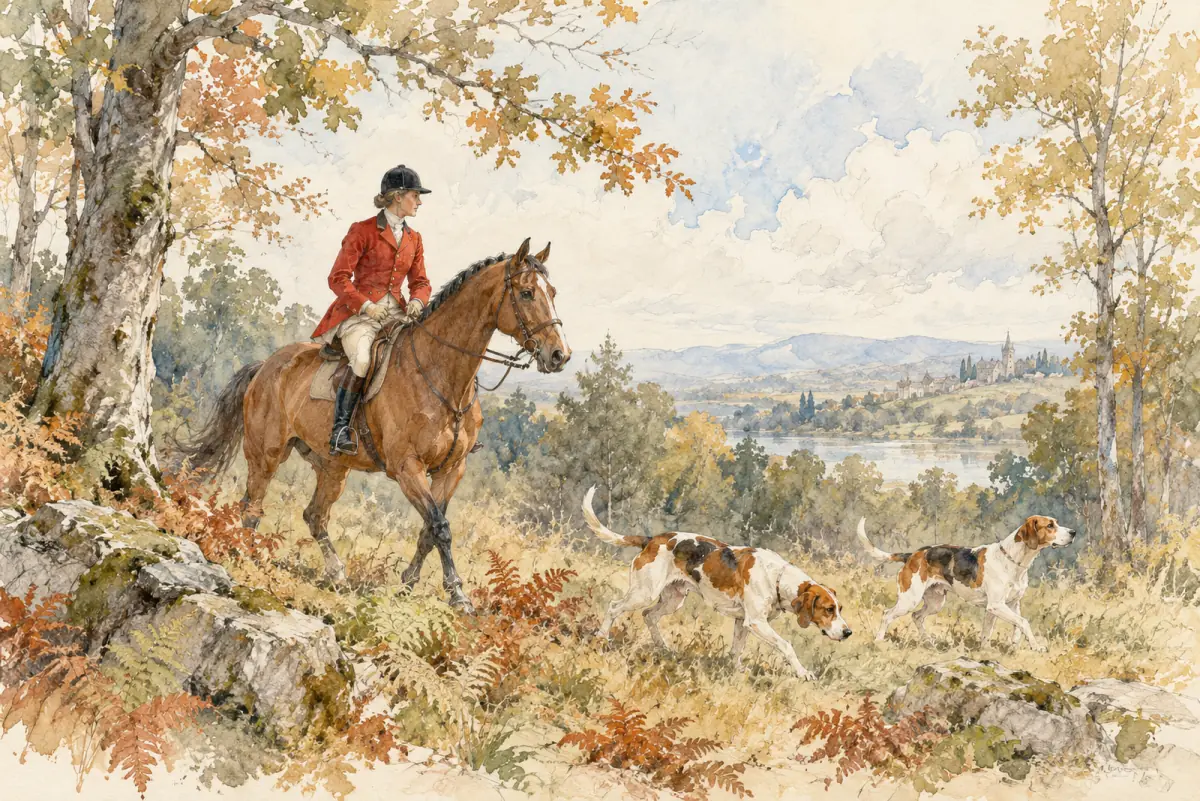
Couton Veyrac Jamault attributes Chasse à courre to Hugo Grygkar and explicitly reports a first edition in 1950.[9] Its catalogued square is printed silk in the 90-centimeter format, with a yellow-green ground.[9]
Carré Society agrees on Grygkar’s authorship but gives 1951 as the design date.[10] It also claims that the drawing was not reissued, without supplying a contemporary publication supporting that assertion.[10]
Le Grenier d’Amatxi likewise reports 1951 and describes bronze and ocher tones with a contrasting rolled edge.[11] This adds a documented color treatment but does not resolve the disagreement between the auction and specialist chronologies.[9][11]
The year 1950 is retained as the explicitly identified inaugural date from the auction catalogue, with the competing 1951 account kept visible.[9][10][11] No claim of an uninterrupted edition history follows from these descriptions.[9][10][11]
Still open: The exact printed signature and inaugural release remain unconfirmed. The consulted records do not establish a complete reissue history or a documented annual-theme connection.
Costumes de dames
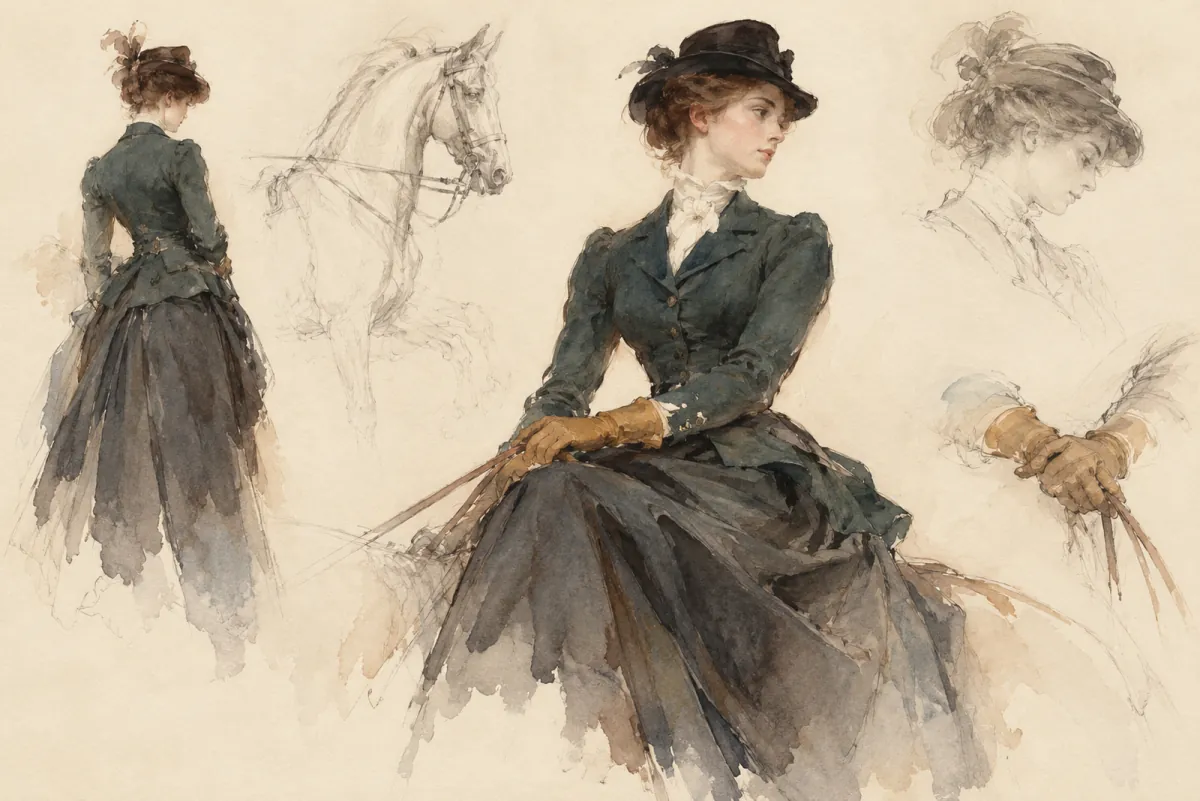
Costumes de dames is attributed to Hugo Grygkar in the catalogue of the Didier Ludot and Félix Farrington collection.[12] The entry associates the drawing with 1950 and describes printed silk with an anise-green margin.[12] Its measured dimensions are 80 by 80 centimeters.[12]
Dogny provides an important clarification by cataloguing the title as Costumes de dames d’après Deveria and naming Grygkar as the scarf designer.[13] This distinguishes the maker of the textile design from the author of its historical source imagery.[13] It offers a documented explanation for dealer listings that name Devéria alone.[13][14]
A dealer example measures 90 centimeters square and combines blue, white and yellow.[14] The difference from the auction’s 80-centimeter measurement is recorded rather than silently normalized.[12][14] It does not establish two official formats without further object or house documentation.[12][14]
The attribution is thus better supported as Grygkar after Devéria than as an unexplained choice between two competing designers.[12][13] The consulted catalogues do not identify the individual source plates or transcribe an artist signature from the silk.[12][13] The date 1950 remains a catalogue attribution to the drawing.[12]
Still open: The exact printed signature and inaugural release remain unconfirmed. The consulted records do not establish a complete reissue history or a documented annual-theme connection.
La chasse en afrique
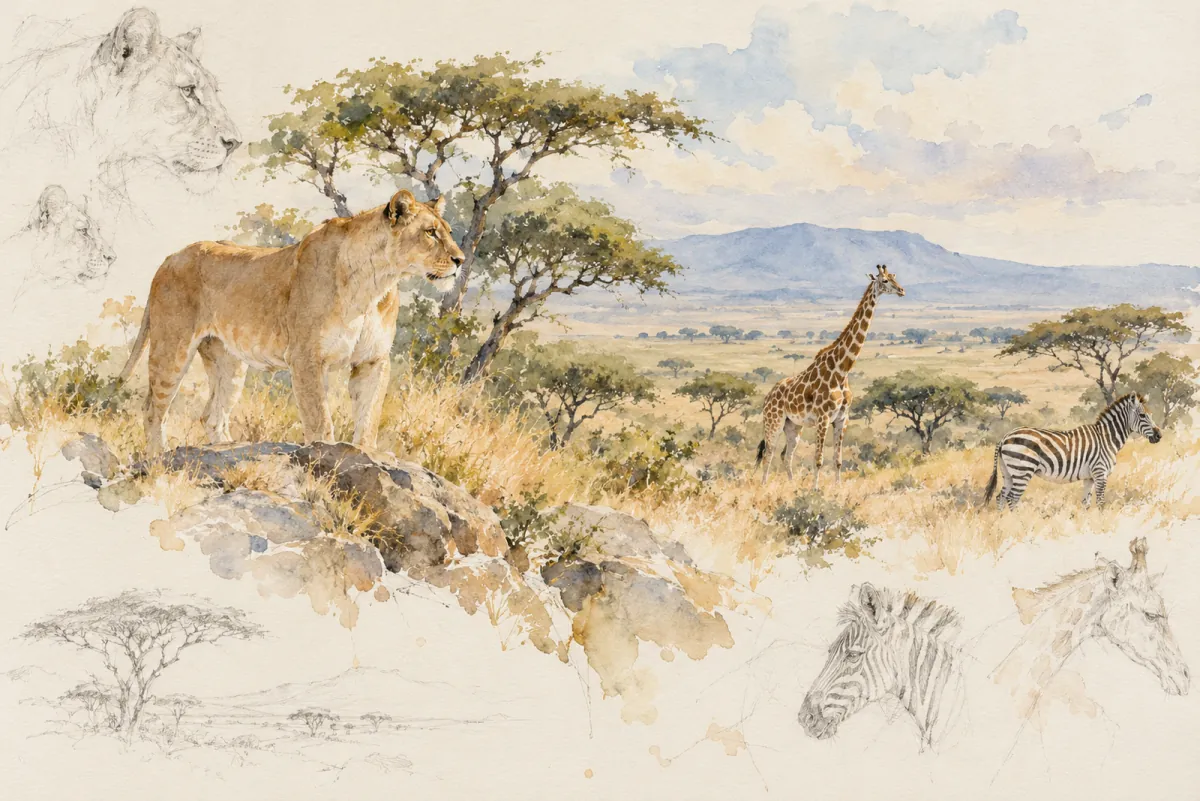
La chasse en afrique is attributed to Hugo Grygkar by both a specialist scarf catalogue and the collector reference Scarf Sage.[15][16] The specialist records a white example in silk measuring 70 centimeters square.[15] Scarf Sage likewise classifies its illustrated example in the 70 format.[16]
Both sources give 1956 as the original year.[15][16] Neither consulted entry identifies an original house release document supporting that date.[15][16] Agreement between secondary records is useful but does not by itself establish their research independence.[15][16]
Goodman states that the motif appeared in the 70-centimeter format in 2009 and associates it with a Spring-Summer 2009 booklet image.[15] The distinction is important: the later size should not be projected backward onto the reported 1956 edition.[15]
The collector catalogue credits its image to Le Brech & Associés, offering a possible route to an auction record.[16] The consulted entry does not reproduce enough catalogue detail to establish a release chronology, printed signature or specific historical source for the composition.[16]
Still open: The exact printed signature and inaugural release remain unconfirmed. The consulted records do not establish a complete reissue history or a documented annual-theme connection.
Les armes de Paris
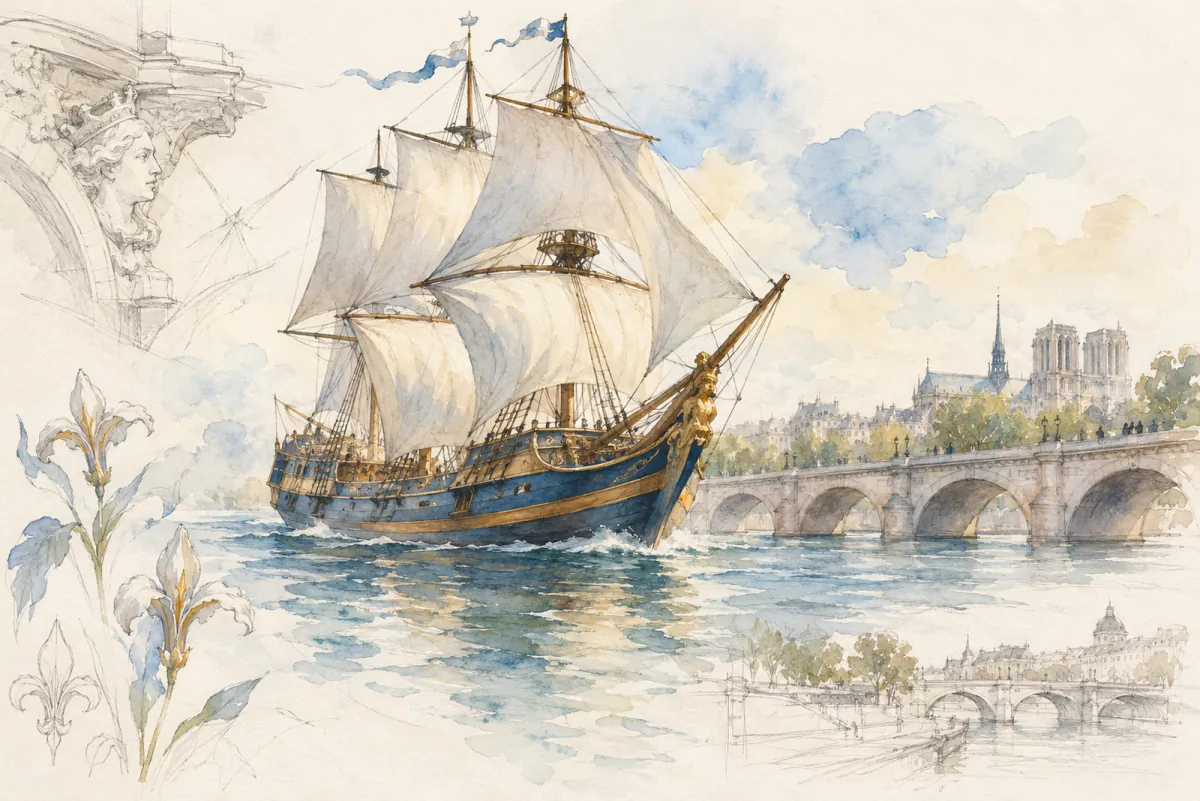
Quittenbaum attributes Les armes de Paris to Hugo Grygkar and dates its catalogued scarf to 1954.[17] The notice records the house marking, but does not transcribe an artist’s signature.[17]
A separate auction description documents a wool-and-silk sweater based on this scarf.[18] Its printed section combines gold and raspberry tones with pine-green wool and a three-button back fastening.[18] The notice explicitly dates the drawing’s creation to 1954.[18]
Bijoux Occasions records a 90-centimeter silk square in green, blue and red.[19] This provides another color treatment, while the auction evidence independently supports the artist attribution.[17][18][19]
The sweater demonstrates an application of the scarf design to clothing, not a separately established scarf format.[18] Creation in 1954 is documented, but a contemporary release record and a full reissue history remain absent from the consulted descriptions.[17][18]
Still open: The exact printed signature and inaugural release remain unconfirmed. The consulted records do not establish a complete reissue history or a documented annual-theme connection.
Provence
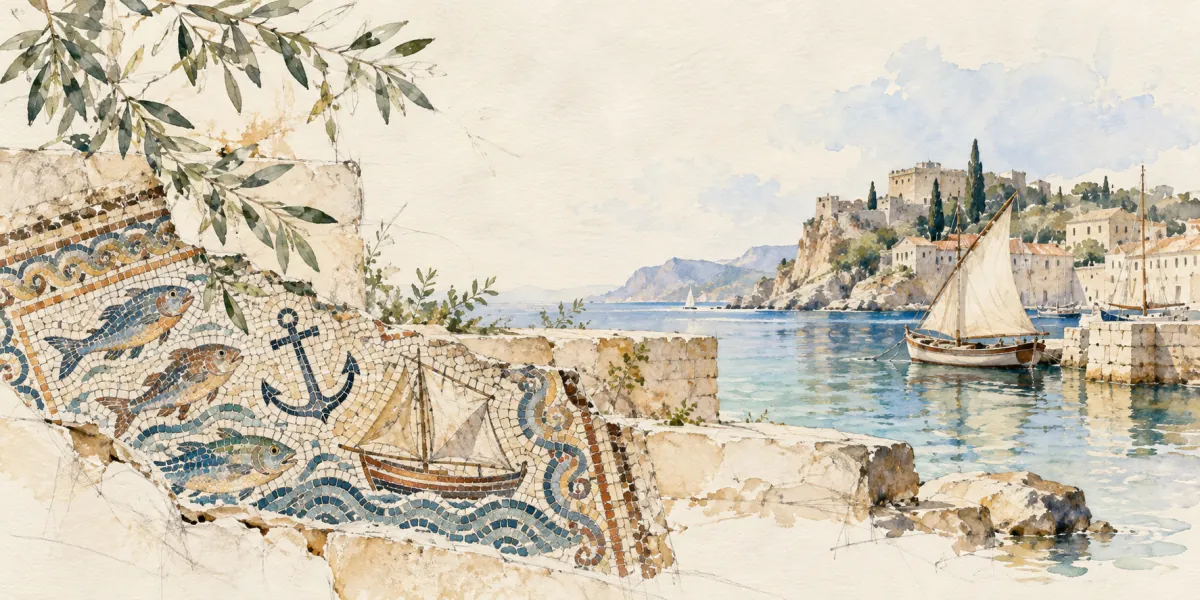
Provence is attributed to Hugo Grygkar by Alexandre Landre in a catalogue entry for a silk square.[20] An Auctionet record uses the title La Provence and associates the design with 1958.[21]
A specialist listing uses the alternative names Provincia and Provence, also crediting Grygkar.[22] It describes an apricot-bordered silk example, made in France and measuring 90 centimeters square.[22]
The specialist places that object around 1958.[22] This approximate dating is compatible with the auction attribution but does not explicitly establish the inaugural release.[21][22]
The records support the artist and the silk-square format.[20][21][22] They do not identify a precise historical source for the composition or document a complete reissue sequence.[20][21][22]
Still open: The inaugural date and reissue history remain unconfirmed. The exact artist signature and the historical source of the imagery have not been established.
Quai aux fleurs
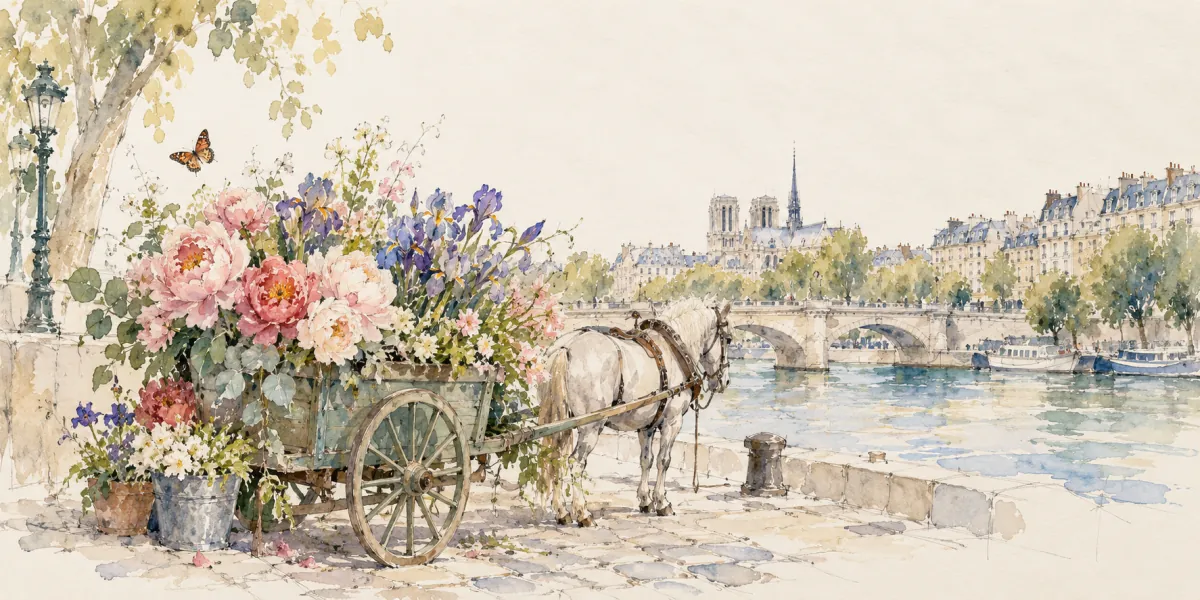
Quai aux fleurs is attributed to Hugo Grygkar in the Crédit Municipal de Paris catalogue, which describes a printed silk twill square in gray, blue and green against white.[23] Its approximate measurements are 88 by 89 centimeters.[23] The title is linked in the catalogue to the Parisian setting of the Île de la Cité and its flower market.[23]
A different textile treatment appears in Artcurial's catalogue.[24] That auction house records a red-bordered square under the same title as soie sabrée.[24] Its notice does not give a manufacturing date or describe the relationship between that fabric and the twill example.[23][24] The records therefore establish two catalogued textile descriptions without supporting a full edition sequence.[23][24]
Bukowskis provides another dated object description, identifying a silk example as belonging to the 1960s and measuring 88 centimeters square.[25] This is a dating of the offered object, not an explicit claim about the design's original introduction.[25] It cannot be used on its own to settle a first-edition year.[25]
Taken together, these records document a named design, an artist attribution and examples in different materials and colors.[23][24][25] Their information is strongest at the object level: none of the three notices identifies an original seasonal booklet or sets out the history of reissues.[23][24][25] The Parisian title can be retained without assigning the square to a particular anniversary or claiming a complete chronology.[23][24][25]
Still open: The 1952 introduction reported in the earlier research was not independently re-established here. The printed artist signature, the complete motif description and the reissue years remain unresolved. The soie sabrée example should not be assigned to a date without further evidence.
À chacun son cheval
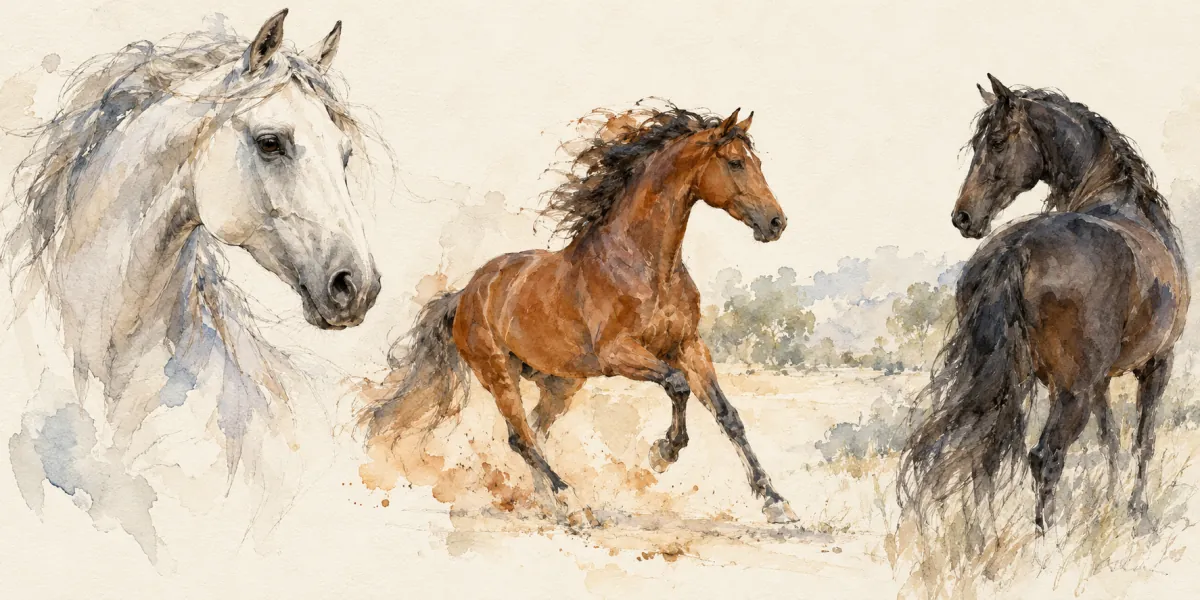
À chacun son cheval is attributed to Hugo Grygkar in a specialist description of a 90-centimeter silk square.[26] Its colors include white, brown, red, gray and sand.[26]
An independent auction notice combines the titles Les Distractions Hippiques and À Chacun Son Cheval and also names Grygkar.[27] Its example is described as violet and cream silk.[27] The longer title is therefore documented in a catalogue rather than inferred from a dealer’s wording.[27]
The specialist explains the subject as different people paired with suitable horses, mentioning a military figure and an elegantly dressed woman.[26] That description supplies a modest reading of the motif without identifying every rider.[26]
The same source reports 1946 and claims no later edition.[26] The auction notice does not corroborate either historical assertion, so neither is treated as established chronology.[26][27]
Still open: The exact printed signature and inaugural release remain unconfirmed. The consulted records do not establish a complete reissue history or a documented annual-theme connection.
À la Gloire des bataillons de chasseurs
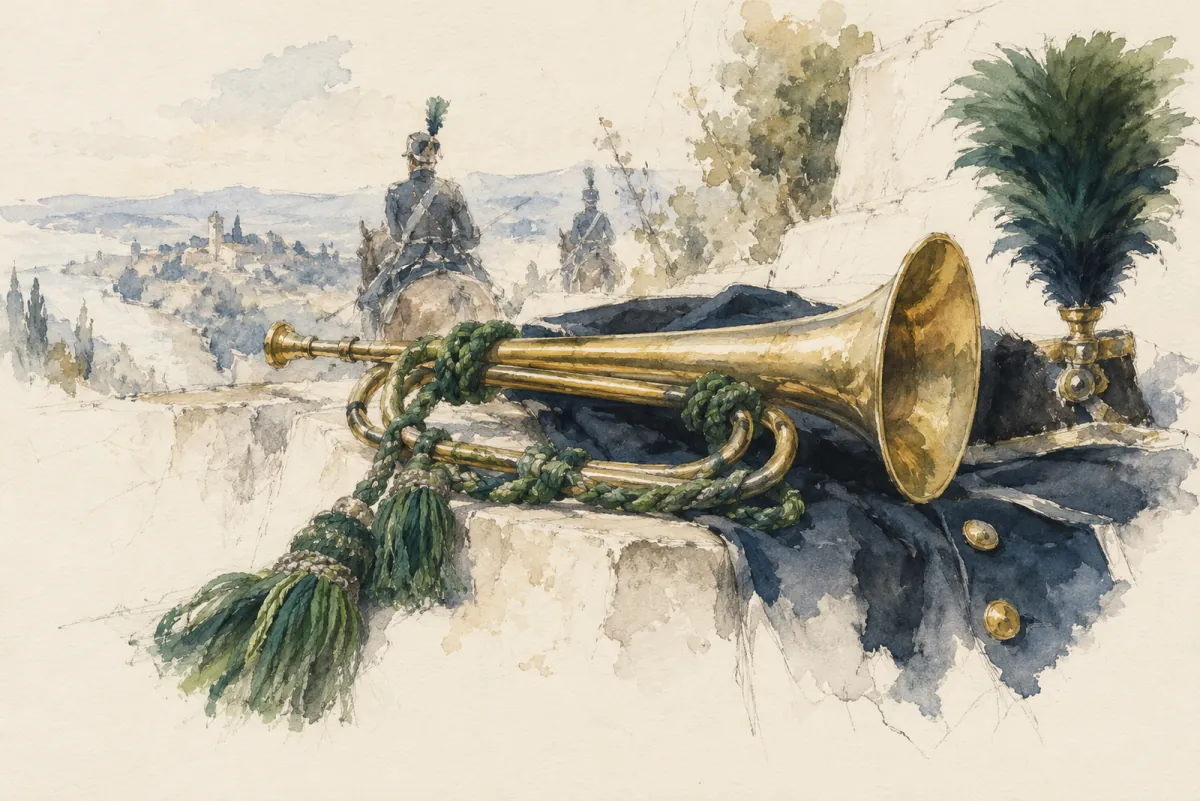
À la Gloire des bataillons de chasseurs is attributed to Hugo Grygkar by Couton Veyrac Jamault.[9] The catalogue explicitly identifies 1952 as its inaugural edition and describes a printed-silk carré 90 with beige and yellow ground.[9]
A Bonhams catalogue independently associates the creation with 1952 and names Grygkar.[28] Its example has a sky-blue margin and measures 90 centimeters square.[28] The entry cites Fontan’s Carrés d’Art IV, page 29, as a bibliographic reference.[28]
Crait-Muller records the title together with 1845 Sidi-Brahim.[29] That inscription provides a more specific historical reference within the catalogued object, but it does not date the scarf’s manufacture to the nineteenth century.[29]
The catalogues establish the artist, silk format and a consistent 1952 association.[9][28][29] They do not identify a commissioning body, a complete source illustration or every military emblem in the composition.[9][28][29]
Still open: The precise printed artist signature and any commissioning body remain unverified. A complete iconographic explanation and reissue history are not established.
Also by Hugo Grygkar
Sources and limits
- Deo Juvante Monaco / Armes de Monaco, lot 24 · Gazette Drouot
- The Armes de Monaco Carré Inspiration · Carré de Paris2020-06-29 ; mis à jour 2025-08-21
- Armes de Monaco · Carré de Paris2023-10-20 ; mis à jour 2025-01-01
- Vente 104, lot 275 · Haynault
- L’art du luxe, lot 60 · Bonhams, Gazette Drouot2023-10-31
- Biarritz, édition spéciale · Le Grenier d’Amatxi
- Cadrans anciens, lot 35 · Bonhams via The Saleroom2023-10-30
- Cadrans anciens · Le Grenier d’Amatxi
- Résultats, lot 425 · Couton Veyrac Jamault2023-06-20
- Chasse à courre · Carré Society
- Chasse à courre · Le Grenier d’Amatxi
- Collection Ludot-Farrington, lot 498 · Gazette Drouot2021-11-10
- V1015, lot 223 · Dogny Auction
- Costumes de dames · Valois Vintage
- La chasse en Afrique 70 · Abigail Goodman
- La chasse en afrique · Scarf Sage
- Auction 166 D · Quittenbaum2022-12-01
- Vissi d’arte, lot 106 · Interencheres, catalogue Vissi d’arte2026-10-10
- Les armes de Paris · Bijoux Occasions
- Provence, lot 38 · Alexandre Landre
- La Provence, Hugo Grygkar, 1958 · Auctionet
- Provincia or Provence by Hugo Grygkar · 1stDibs, vendeur parisien
- Quai aux fleurs, lot 24 · Crédit Municipal de Paris via Interencheresvente annoncée le 10 octobre
- Quai aux Fleurs, lot 151 · Artcurial
- A 1960s silk scarf, lot 1278 · Bukowskis
- À chacun son cheval · Le Grenier d’Amatxi
- Les Distractions Hippiques, lot 263 · Gazette Drouot
- À la gloire des Bataillons de Chasseurs, lot 56 · Bonhams, notice reproduite par FindArtInfo2023-10-31
- Catalogue, lot 196 · Crait-Muller2023-12
Separate catalogues do not always prove independent dating. A date given for a design is not assumed to be its first edition unless a source says so.