
Hugo Grygkar’s place in the Hermès story can be approached through two securely attributed designs: Ex-Libris, composed in 1946 and Brides de Gala, created for a silk scarf in 1957. Both invite us to look at the work of arrangement. An object can already carry a history; the designer must decide how that history will inhabit a square.[2][1][+]
Ex-Libris begins with a small, personal mark of ownership. Hermès explains that Émile-Maurice Hermès chose an image by Alfred de Dreux for his bookplate in 1923: Duc attelé, groom à l’attente. Grygkar’s later scarf brings this reference into another medium. The connection between a library mark and a wearable image is particularly suggestive. What once identified a collection of books becomes something that can travel with its wearer.[2]
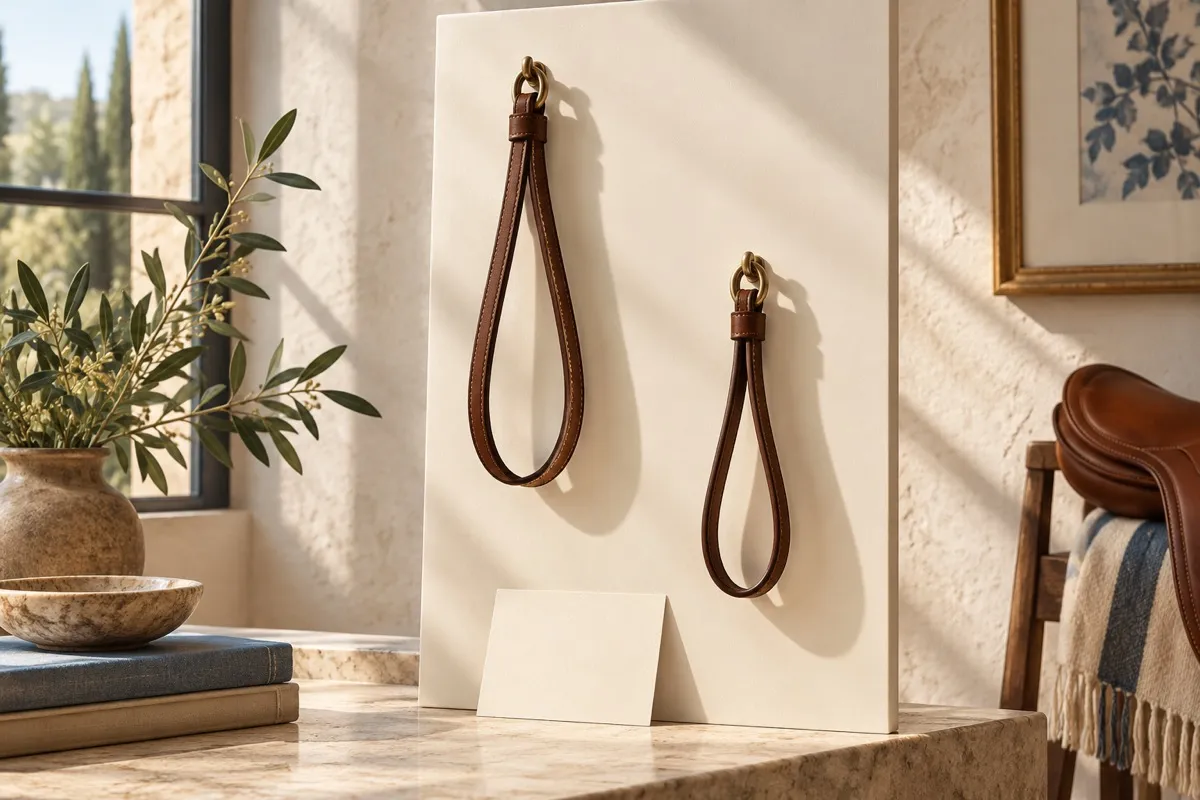
Brides de Gala takes its cue from harness in the Émile Hermès collection. The house connects it explicitly with its beginnings in saddlery and harness-making. There is no need to invent an elaborate scene around these objects to recognize their possibilities: straps, fittings and curves can supply a visual vocabulary of their own. A familiar tool can be seen anew when removed from its everyday task and given room within a composition.[1][+]
The design’s later life also deserves attention. Hermès has adapted Brides de Gala into a large checkerboard for cushions and blankets. Such transformations should not be mistaken for new drawings personally made by Grygkar. They show instead how an established composition can become material for another design decision, with its own format and use.[1]
For a collector, these two works provide a clear beginning: compare what is borrowed, what is rearranged and what remains recognizable after the format changes. Grygkar’s achievement is best encountered in those relationships, rather than reduced to a nickname or an uncertain claim about a first scarf.
Sources & further reading
- Coussin Brides de Gala · HermèsLes secrets d’un objet, first sentence · Les secrets d’un objet, second sentence · Les secrets d’un objet, last paragraphConsulted 2026-10-27
- Ex-Libris triangle · HermèsThe story behind, opening sentence · The story behind, bookplate paragraphConsulted 2026-10-27