

Africa
The website dedicated to Robert Dallet dates Africa’s first collection appearance to 1997 and identifies a 90-centimeter silk scarf.[1]
Eppli independently states that the design was first published in 1997.[2] Its auction catalogue credits Dallet and records a 90-centimeter square in silk with hand-rolled hems.[2]
A separate auction description identifies wild animals of the savanna on an orange, red, brown and black example.[3] This supplies object-specific evidence for the animal subject beyond the broad geographical title.[3]
The two dated records support 1997 without establishing a specific launch day or a complete reissue sequence.[1][2] The descriptions do not connect the animals to a particular expedition or identify a single preparatory drawing.[2][3]
Still open: The exact printed signature and inaugural release remain unconfirmed. The consulted records do not establish a complete reissue history or a documented annual-theme connection.
En piste
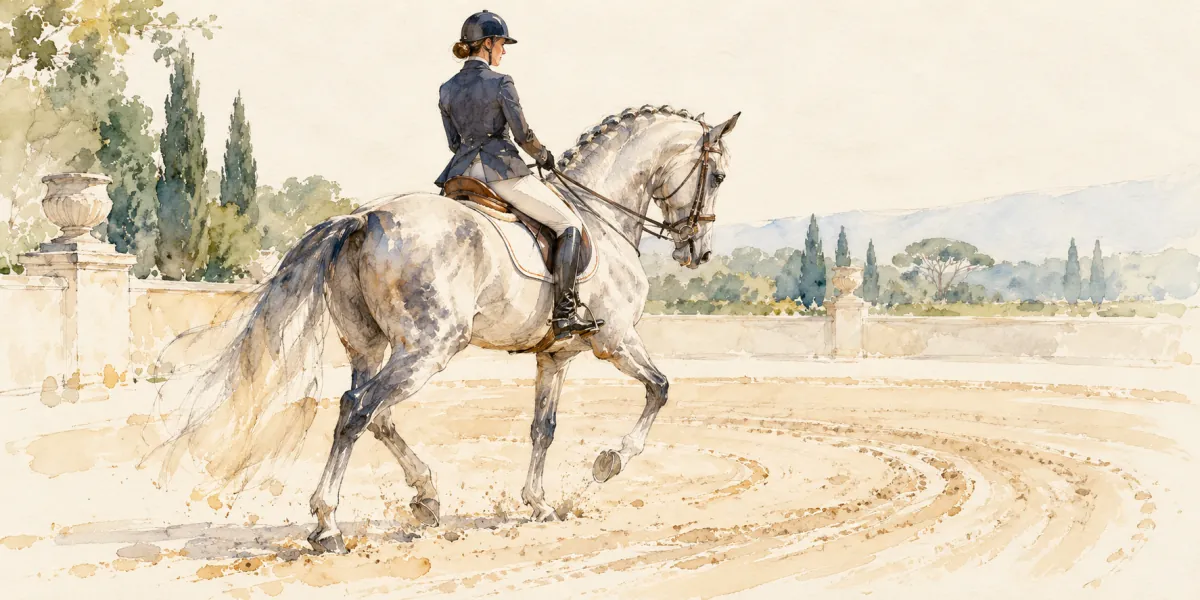
The website dedicated to Robert Dallet explicitly identifies En piste as a 90-centimeter silk scarf first released in the 1998 collection.[1]
Dorotheum independently dates the drawing to 1998 and describes a circus composition with performers, horses and ponies.[4] Feathers and stars accompany the figures in the catalogued design.[4]
The auction example is silk with rolled edges, measured at approximately 87 by 90 centimeters.[4] This object measurement is consistent with the nominal format identified by the artist-site caption.[1][4]
The records connect the design to circus imagery but do not name a historical troupe or a particular performance.[1][4] Its place in Dallet’s work can therefore be described through the documented animal and performer subject without inventing a specific commission.[4]
Still open: The exact printed signature and inaugural release remain unconfirmed. The consulted records do not establish a complete reissue history or a documented annual-theme connection.
Halte en camargue
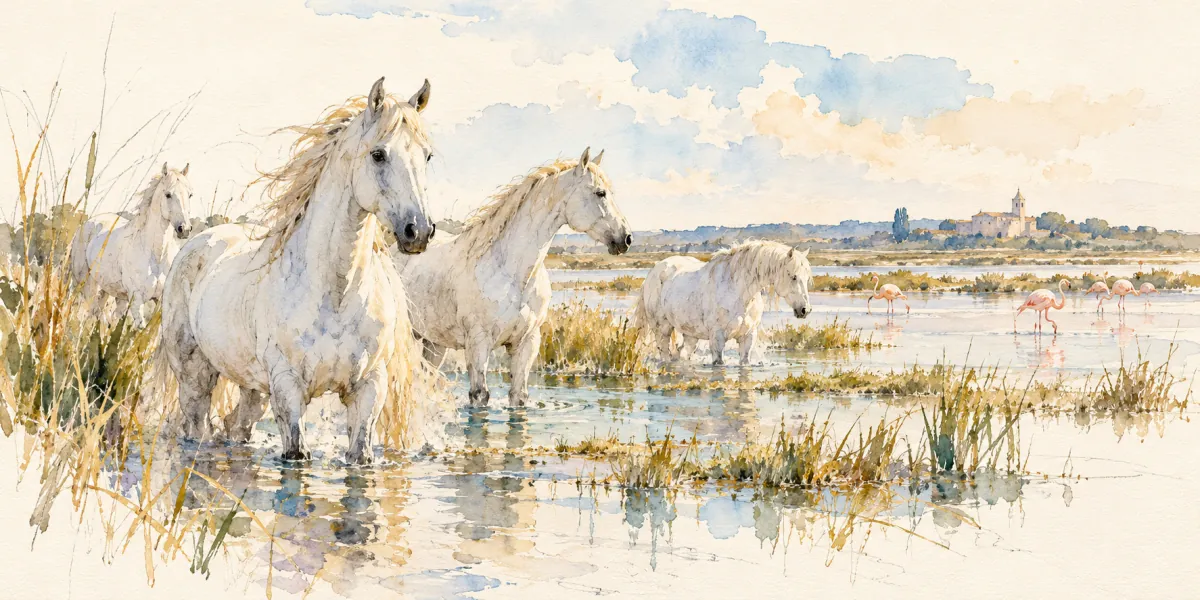
The website dedicated to Robert Dallet explicitly places Halte en camargue in the 1988 collection and identifies the format as a 90-centimeter silk scarf.[1]
NEO Enchères independently catalogues a silk square under the same title and credits Robert Dallet.[5] This supports the artist attribution through an examined object.[5]
The artist-site chronology is retrospective rather than a reproduced seasonal booklet.[1] Nevertheless, its explicit first-collection wording supplies a more precise basis for 1988 than an undated assumption about the design.[1]
The auction notice does not identify a particular journey or source drawing behind the composition.[5] A detailed account of Dallet’s intentions would require evidence beyond these short catalogue records.[1][5]
Still open: The exact printed signature and inaugural release remain unconfirmed. The consulted records do not establish a complete reissue history or a documented annual-theme connection.
Kenya
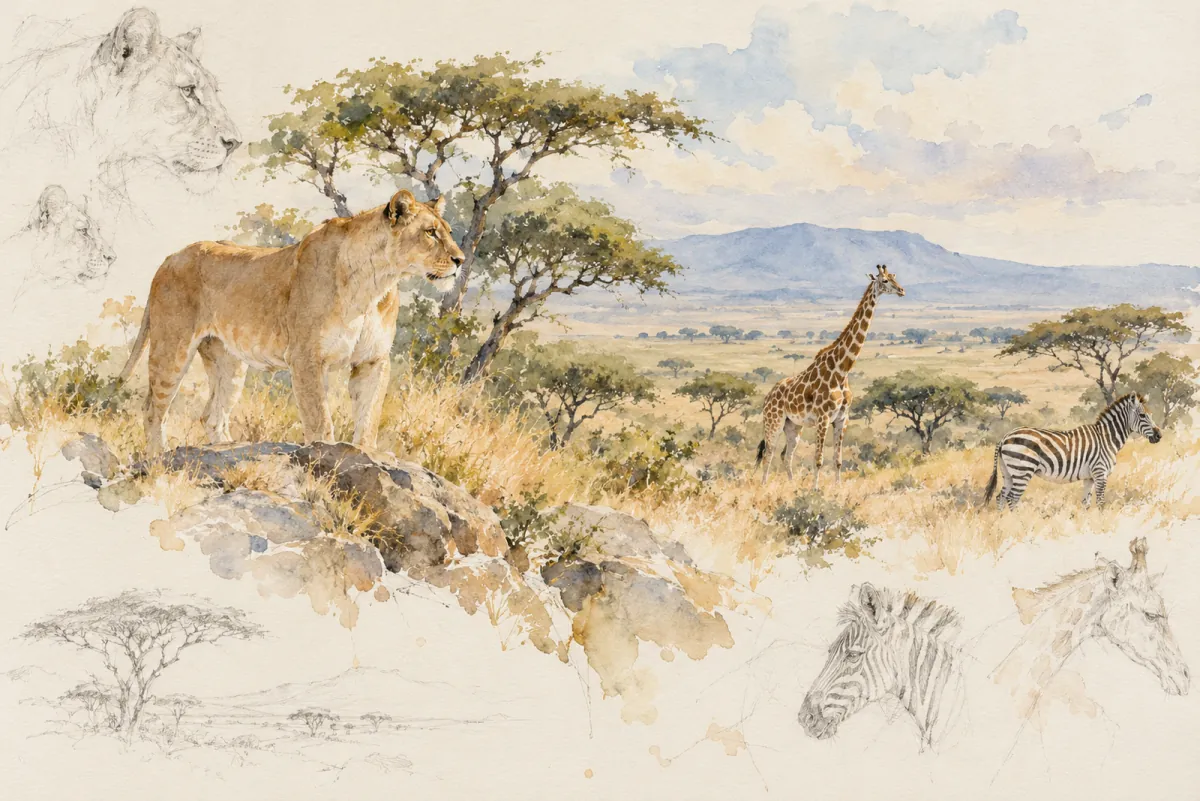
The website dedicated to Robert Dallet explicitly dates Kenya’s first collection appearance to 1988.[1] It identifies a silk scarf in the 90-centimeter format.[1]
Aix Luberon Enchères independently credits Dallet and gives 1988 as the drawing’s creation year.[6] The catalogued square measures 90 centimeters and is described as damask silk.[6]
The material description belongs to that examined object.[6] It should not automatically be extended to every later scarf carrying the same title, since the artist-site caption identifies silk without specifying its weave.[1][6]
The agreement provides a supported first-year entry, but neither record establishes that Kenya was Dallet’s inaugural design for the house.[1][6] The consulted descriptions also do not tie its imagery to an individual journey or a named preparatory work.[1][6]
Still open: The exact printed signature and inaugural release remain unconfirmed. The consulted records do not establish a complete reissue history or a documented annual-theme connection.
Les girafes
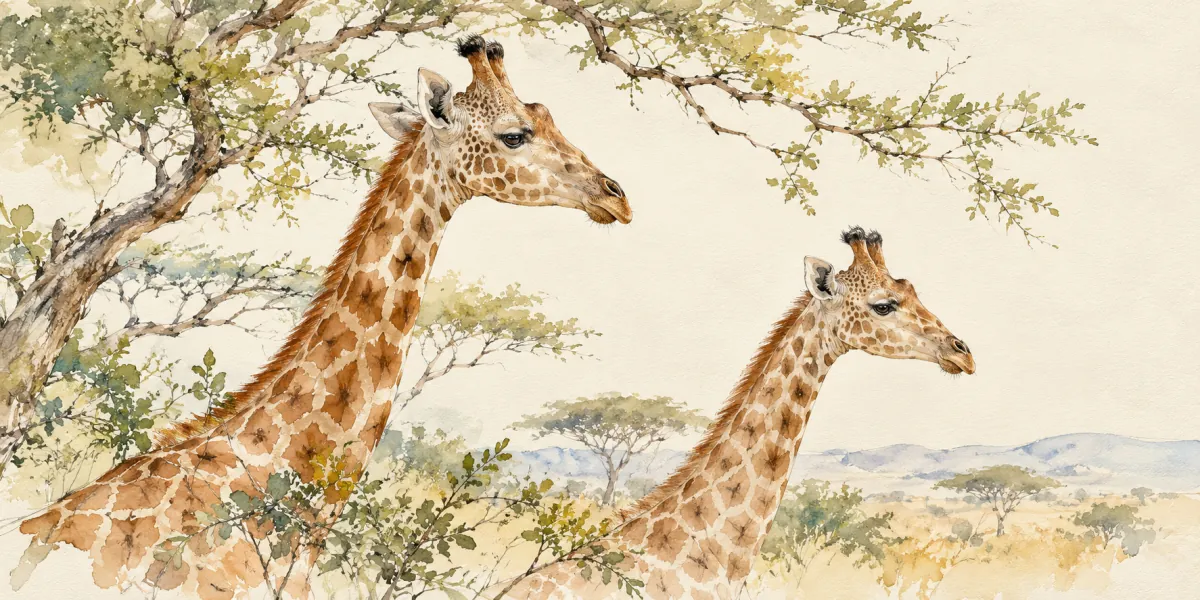
The website dedicated to Robert Dallet explicitly places Les girafes in the 2006 collection and identifies a 90-centimeter silk scarf.[1]
Crédit Municipal de Paris independently records a silk-twill example depicting two adult giraffes with a young animal and birds.[7] Its notice transcribes the signature as R. Dallet.[7]
The catalogued object measures approximately 89 centimeters square.[7] That measurement documents the examined scarf rather than establishing a separate named size from the artist-site 90-centimeter format.[1][7]
The family grouping and accompanying birds provide a specific description of the subject.[7] The records do not identify an individual wildlife expedition or establish that a particular preliminary drawing was used for this composition.[1][7]
Still open: The exact printed signature and inaugural release remain unconfirmed. The consulted records do not establish a complete reissue history or a documented annual-theme connection.
Sichuan

The website dedicated to Robert Dallet explicitly dates Sichuan’s first collection appearance to 1995 and identifies the 90-centimeter silk format.[1]
Hôtel des Ventes des Quinconces independently records a silk square under that title, crediting R. Dallet and associating the drawing with 1995.[8] Its example is predominantly blue and green.[8]
Enchères en Seine also documents a pleated example under the same title.[9] This establishes a different textile presentation, but the notice does not provide a complete chronology linking pleated and flat editions.[9]
The first-year statement therefore rests on the explicit artist-site caption, with independent support for the artist and associated date from the auction record.[1][8] The title alone does not establish a particular journey by Dallet or a documented source photograph.[1][8]
Still open: The exact printed signature and inaugural release remain unconfirmed. The consulted records do not establish a complete reissue history or a documented annual-theme connection.
Sources and limits
- Hermès collaborations · Site consacré à Robert Dallet
- Mode et accessoires, lot 29 · Eppli2026-01-10
- Africa, lot 23 · Gazette Drouot
- En piste · Dorotheum
- Halte en Camargue, lot 87 · NEO Enchères
- Catalogue, lot 106 V · Aix Luberon Enchères2024-06
- Catalogue, lot 68 · Crédit Municipal de Paris2024-10-12
- Collection 2023 Summer · Hôtel des Ventes des Quinconces2023-06-01
- Vente d’été, lot 213 · Enchères en Seine, Interencheres2026-08
Separate catalogues do not always prove independent dating. A date given for a design is not assumed to be its first edition unless a source says so.