

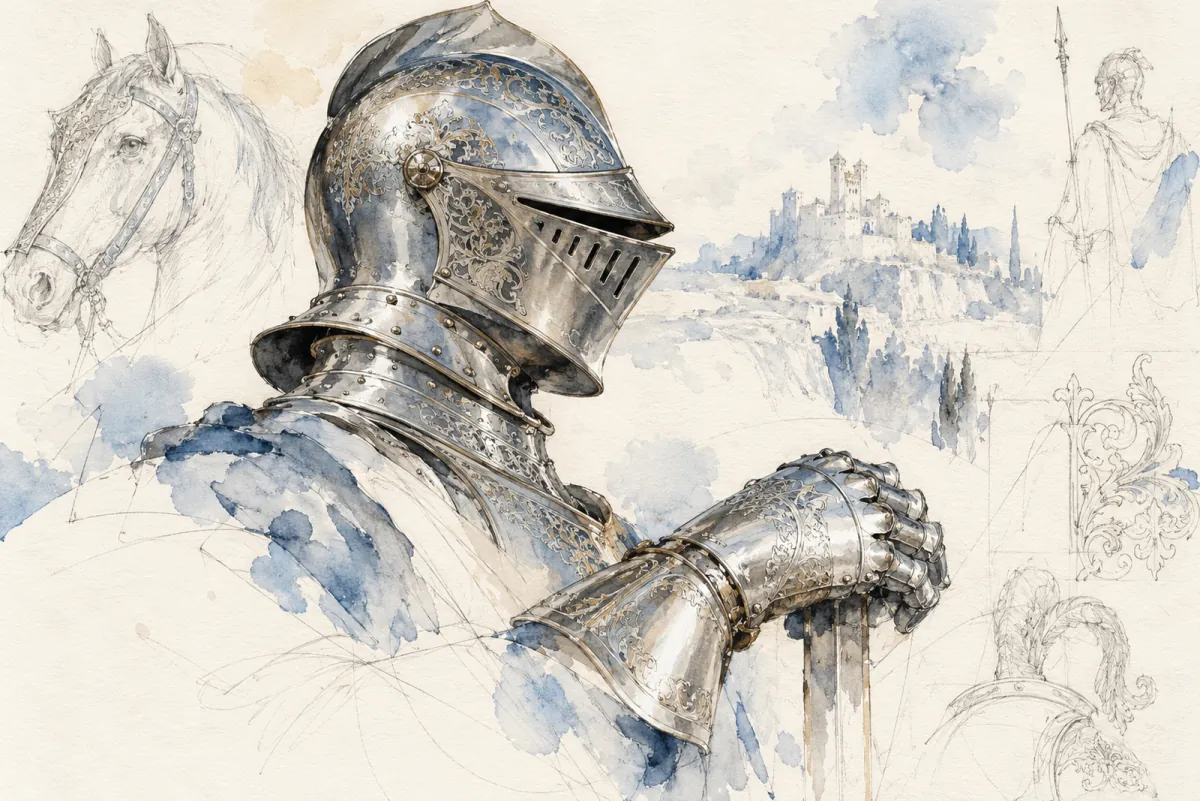
Armeria
Gros & Delettrez records Armeria as a printed silk square signed Ledoux.[1] A later catalogue from the same auction house repeats that signature attribution for a silk-twill example.[2]
Il Ponte independently describes a 90-centimeter square by Philippe Ledoux with a black ground and mustard-colored border.[3] The catalogue identifies the material as silk.[3]
Another auction description records a titled and signed example with a beige ground and navy border, measured at 89 by 86 centimeters.[4] These observations document distinct color treatments without assigning them to a complete edition sequence.[3][4]
The signature Ledoux is directly recorded, while the complete artist name is supplied by the independent catalogues.[1][3][4] The consulted object descriptions do not establish an inaugural date or identify the historical illustration underlying the composition.[1][2][3][4]
Still open: The exact printed signature and inaugural release remain unconfirmed. The consulted records do not establish a complete reissue history or a documented annual-theme connection.
Attelage en arbalète
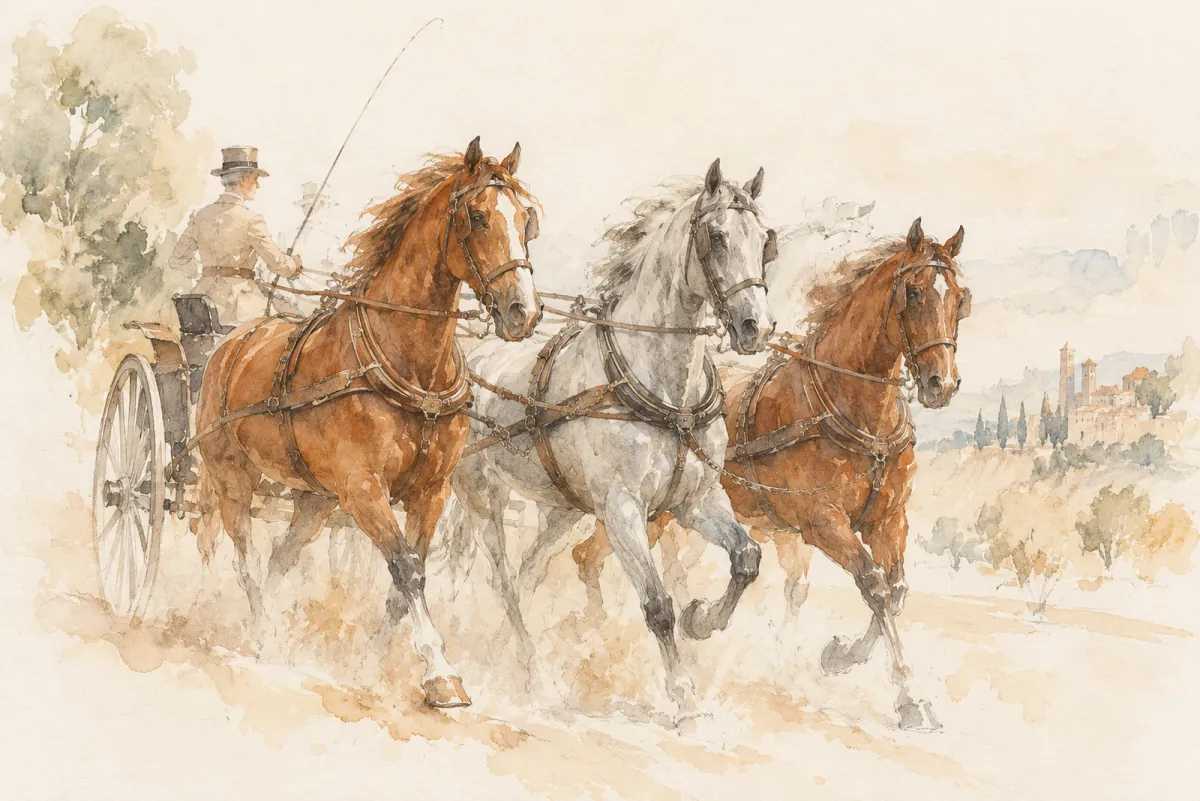
Attelage en arbalète is attributed to Philippe Ledoux in a Paris Ouest Enchères catalogue.[5] The entry explicitly records an inaugural edition in 1972 and reissues in 1993 and 2002.[5] Its beige-ground silk-twill square has green borders and measures 90 by 88 centimeters.[5]
Élysée independently describes a 90-centimeter silk square with a green border and a team of harnessed horses.[6] Bolaffi also associates the silk design with Ledoux and 1972.[7] These records support the artist and equestrian subject across separate catalogues.[5][6][7]
The design also appears in other object categories.[8] Artcurial records a framed poster with the title, the Ledoux signature and a drawing date of 1972, measuring 98 centimeters square.[8] That poster is evidence of another use of the image, not a scarf format.[8]
The catalogues do not specify the production date of each individual silk example or map colors to editions.[5][6][7] The release sequence is therefore retained at the level explicitly stated by Paris Ouest, without assigning every surviving square to one of those years.[5]
Still open: The exact printed signature on the silk and the source of the original drawing remain unverified. The consulted records do not establish a complete colorway chronology.
Avenue des acacias
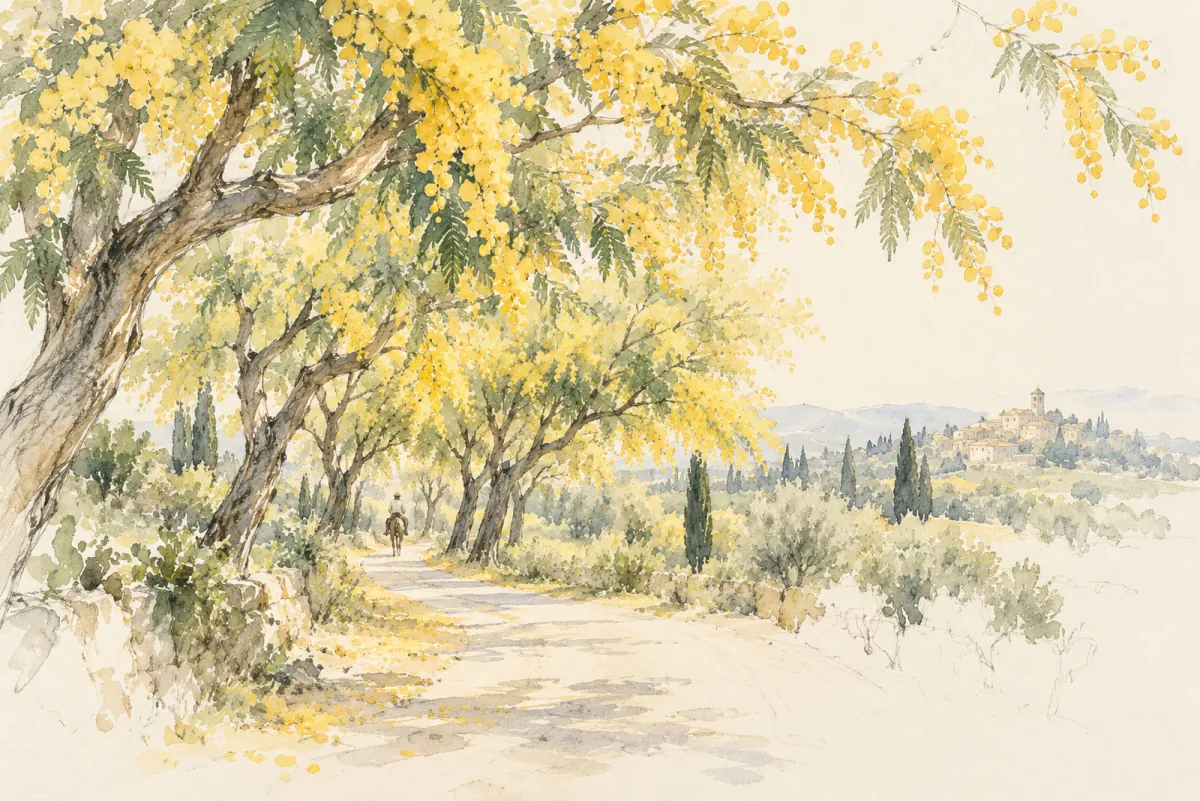
Skånes Auktionsverk identifies Avenue des acacias as a Philippe Ledoux design dated 1964.[9] Its silk example measures approximately 88 centimeters square.[9] Bolaffi independently records a 90-centimeter silk square with the same artist and date.[10]
An Auctie’s catalogue hosted by Marcilhac Expert also identifies the drawing with Ledoux and records the 90-centimeter format.[11] These descriptions establish a consistent attribution across several catalogued objects.[9][10][11]
A specialist description records men and horses on a beige-and-white example and transcribes the signature as LEDOUX.[12] Its measurements of 88 by 84 centimeters describe that particular object rather than a separately named format.[12]
The catalogues associate the drawing with 1964, but their wording does not explicitly establish a first release.[9][10] No consulted contemporary record identifies the exact scene, the source illustration or a complete sequence of later editions.[9][10][11][12]
Still open: The exact printed signature and inaugural release remain unconfirmed. The consulted records do not establish a complete reissue history or a documented annual-theme connection.
Carrick à pompe
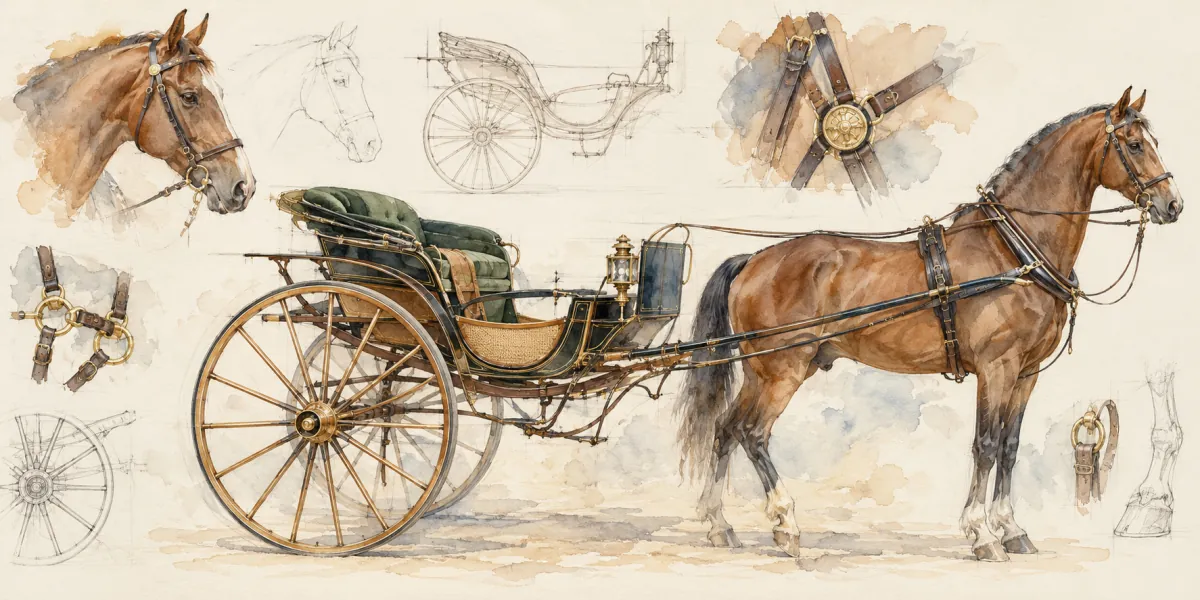
Carrick à pompe is attributed to Philippe Ledoux by Bolaffi, whose catalogue associates a 90-centimeter scarf with 1953.[13] A Cambi catalogue instead gives 1972.[14] Those dates differ too substantially to be silently combined into one release history.[13][14]
A specialist description at Fifth Main places an example around 1973.[15] It describes a carriage at the center with saddles and bridles in the corners, against a predominantly brown composition.[15]
The same description records Ledoux’s signature.[15] Bijoux Occasions independently offers the artist attribution and a 1973 date for a blue-and-yellow 90-centimeter silk example.[16]
The documented carriage and riding equipment give the design a precise equestrian subject.[15] The chronology remains unresolved: none of these consulted notices explains whether the dates refer to different editions or contain cataloguing errors.[13][14][15][16]
Still open: The exact printed signature and inaugural release remain unconfirmed. The consulted records do not establish a complete reissue history or a documented annual-theme connection.
Cartes et tarots
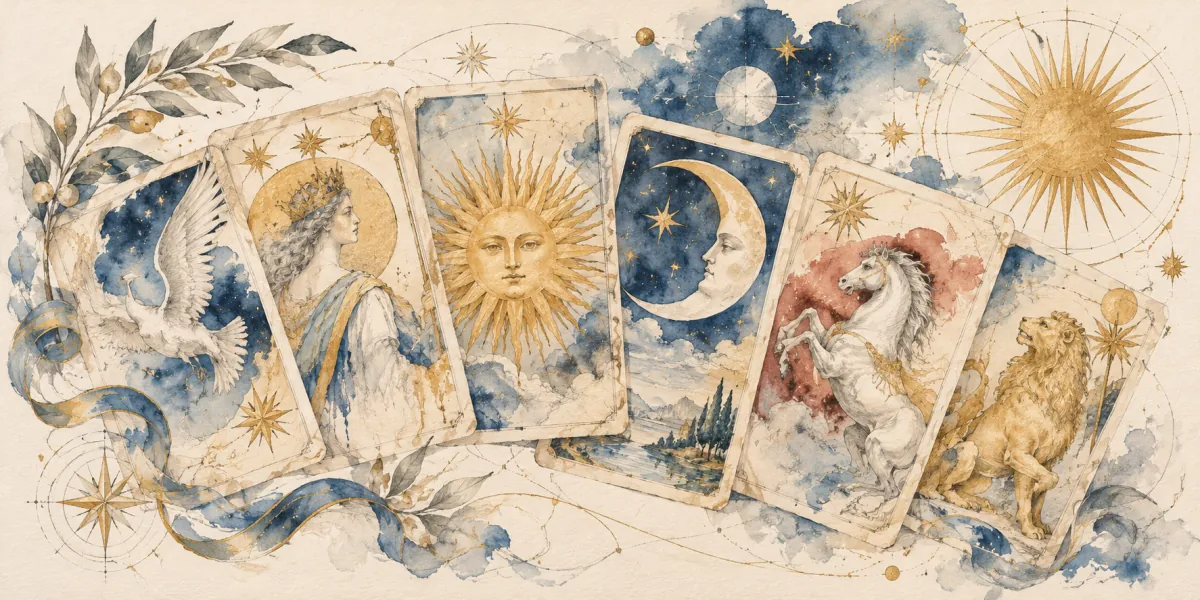
Cartes et tarots appears in a Couton Veyrac Jamault catalogue under the artist name Ph. Ledoux.[17] The silk example has an ivory border with old-gold and blue tones.[17]
A separate 2024 auction record describes a blue silk-twill square under the same title.[18] That notice records the signature Ledoux, providing a more precise form of the name found on the object.[18]
The two descriptions support the title and attribution across separate catalogued examples.[17][18] Their differing colors are object-level evidence rather than a complete list of editions.[17][18]
Neither consulted catalogue establishes an inaugural date or explains the historical deck behind the imagery.[17][18] The title should therefore not be used to identify a particular tradition or source illustration without further documentation.[17][18]
Still open: The exact printed signature and inaugural release remain unconfirmed. The consulted records do not establish a complete reissue history or a documented annual-theme connection.
Coach et saddle
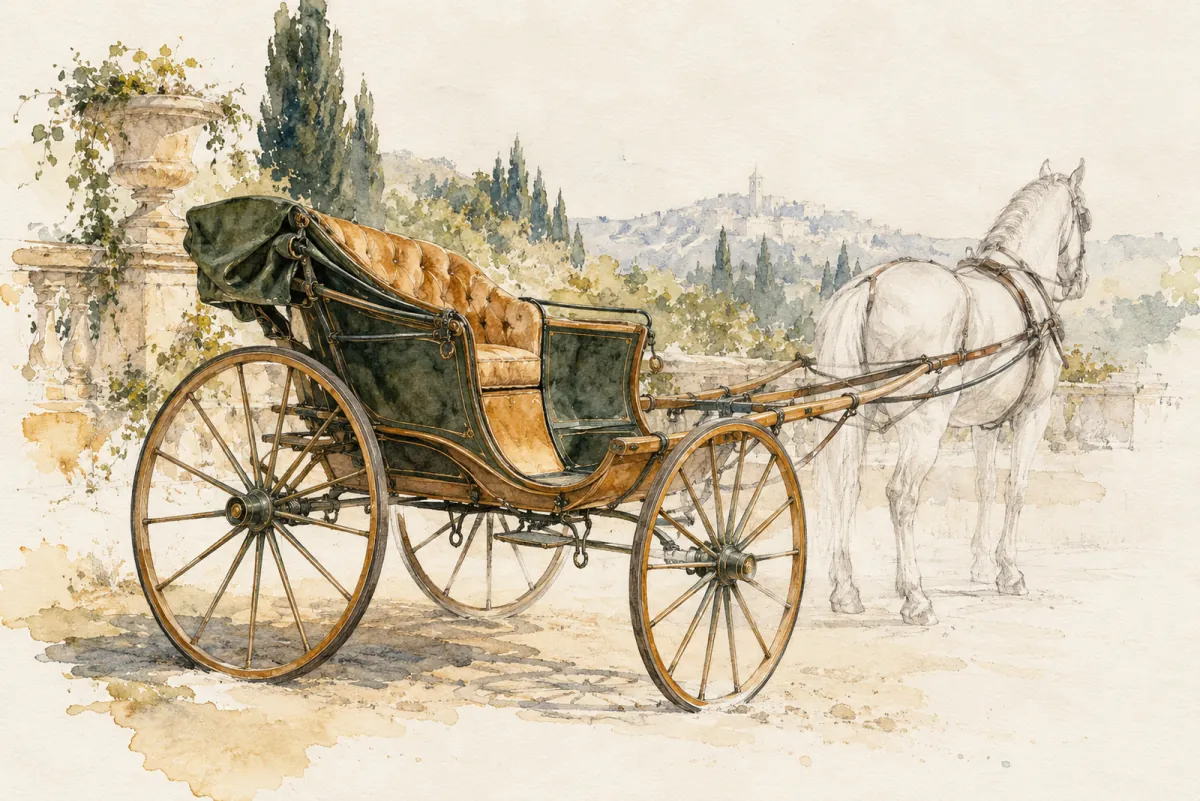
The design supplied under the title Coach et saddle appears in auction catalogues as Coach and Saddle.[19][20] A 2020 catalogue records a 90-centimeter silk-twill square and transcribes the signature as Philippe Ledoux.[19] A 2013 sale uses the shorter signature Ledoux for a white-ground example with a brown border.[20]
Millon documents another 90-centimeter silk example on an ivory ground, enclosed by burgundy borders with gold-colored lines.[21] These descriptions establish several recorded color treatments while leaving their production dates open.[19][20][21] Golding Young measures a separate example at 86 centimeters square, an individual measurement rather than proof of another named format.[22]
A Van Zadelhoff catalogue associates Coach and Saddle with Philippe Ledoux and 1976.[23] That supports the earlier date found in specialist descriptions, but the catalogue does not explicitly distinguish creation from inaugural publication.[23] The first-year field therefore remains unconfirmed.[23]
The auction records are particularly helpful in separating the supplied French-English title from the English title carried in catalogues.[19][20][21] They also move the artist attribution beyond dealer-only evidence.[19][20] They do not identify a particular historical carriage, saddle collection or source illustration behind the drawing.[19][20][21]
Still open: The inaugural edition and a complete reissue chronology remain unknown. The supplied title is preserved, although the catalogues use Coach and Saddle. The historical source of the motif is not established.
La chasse à tir
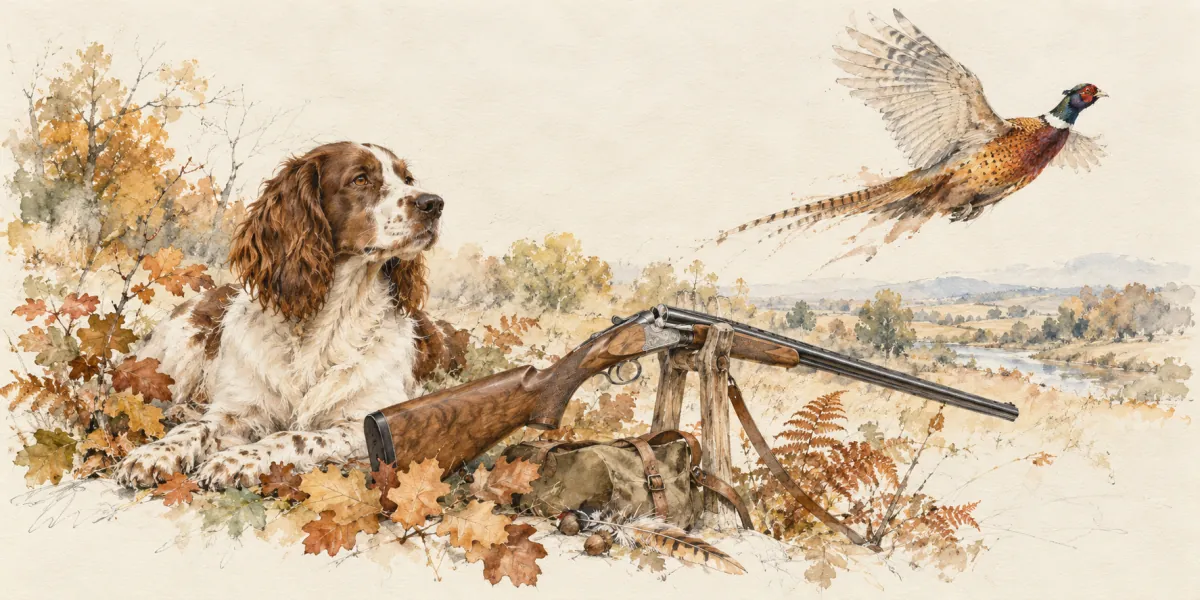
La chasse à tir appears in the Crédit Municipal de Paris catalogue under the shorter title Chasse à tir.[24] The description identifies printed silk twill and records the artist’s signature as Ledoux.[24] A separate auction catalogue attributes an example with a brown border to Philippe Ledoux, supporting the fuller artist name.[25]
The Crédit Municipal example combines beige and gray on a white ground with a green border.[24] It measures approximately 88 by 87 centimeters.[24] Those measurements describe the examined object; they need not imply a distinct format from the nominal 90-centimeter silk carré described in other records.[24][26]
The catalogue explicitly records editions in 1971 and 1992.[24] A dealer’s approximate 1972 dating, reported in the earlier documentation, is not equivalent to an explicit inaugural-year statement.[26] The auction evidence is consequently retained as a documented edition sequence without assuming that it exhausts every production of the design.[24]
The surviving descriptions are strongest on material, signature and color.[24][25] They do not identify the historical illustration behind the hunting subject or a particular event that prompted it.[24][25] Keeping those limits visible avoids turning the title into an unsupported account of Ledoux’s intentions.[24][25]
Still open: The consulted catalogue identifies two edition years but does not explicitly call 1971 the inaugural edition. The original source image, annual theme and complete reissue history remain unknown.
La comédie italienne
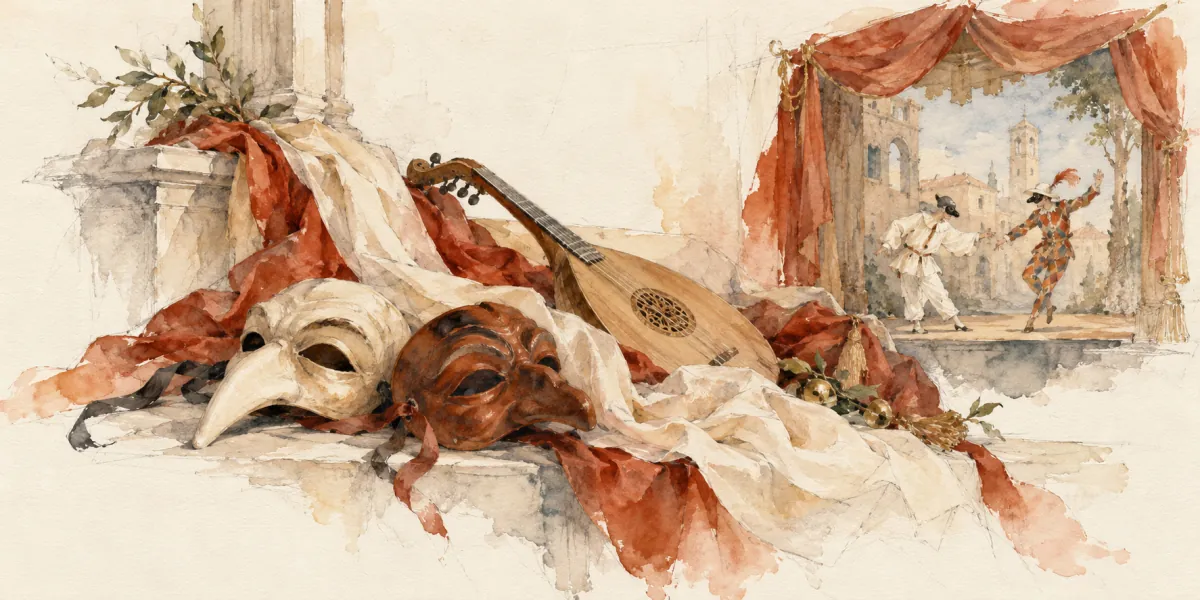
La comédie italienne is attributed to Philippe Ledoux in a Bolaffi auction catalogue, which associates the silk scarf with 1962.[27] The object is recorded as a 90-centimeter square.[27] This independently supports the attribution found in specialist descriptions.[27][28]
Abigail Goodman describes a white example in jacquard silk whose woven design includes lutes and guitars.[28] The printed subject is associated with the commedia dell’arte.[28] The woven instruments and the printed theatrical scenes therefore belong to different layers of the scarf’s decoration as described by the specialist.[28]
A dated collector’s account from 2016 also describes guitar-patterned jacquard and scenes from the commedia dell’arte.[29] Its author reports owning examples with white and colored grounds.[29] These observations support material variety without establishing a complete colorway register.[28][29]
The collector reports an inaugural edition in 1962 and a return in 1993.[29] The auction’s 1962 date supports the earlier association but does not explicitly establish the full release sequence.[27] The 1993 reissue consequently remains a secondary report rather than a verified house chronology.[27][29]
Still open: The exact printed signature and inaugural release remain unconfirmed. The consulted records do not establish a complete reissue history or a documented annual-theme connection.
Promenade de longchamps
Promenade de longchamps is catalogued by Leland Little under the expanded title La Promenade de Longchamps.[30] The auction house attributes the design to Philippe Ledoux and describes different types of carriages arranged in rounded tiers at the center.[30] Its pale-pink example was recorded as a 35-inch silk square.[30]
Alexandre Landre independently attributes a silk carré with the same title to Ledoux.[31] A Crédit Municipal de Paris record also identifies a signed example on a white ground.[32] Together these descriptions provide evidence for the attribution across distinct objects rather than relying on a single dealer’s account.[30][31][32]
An Auctionet catalogue associates the design with 1965.[33] Earlier specialist descriptions additionally proposed editions in 1970 and 1986, but the auction records consulted here do not establish a complete sequence.[30][31][33] The date 1965 is therefore recorded as an auction attribution, not as a verified inaugural release.[33]
The strongest descriptive evidence concerns the carriages and their circular arrangement.[30] It gives the square a specific visual identity without requiring an unsupported identification of every vehicle or passenger.[30] The consulted catalogues do not identify Ledoux’s source drawing or establish that the scene records a particular day at Longchamp.[30][31][33]
Still open: The inaugural edition, exact printed artist signature and proposed 1970 and 1986 reissues remain unconfirmed. The historical source image and a complete format history are not established.
Promenade de paris

A Bonhams description uses the plural title Promenades de Paris and attributes the design to Philippe Ledoux.[34] It records a cream-ground silk-twill square with an ochre margin and gives editions in 1962, 2013 and 2020.[34]
Dorotheum independently records a smaller silk example, approximately 67 centimeters square, with figures strolling in Paris around the border.[35] It also associates Ledoux’s drawing with 1962.[35] This supplies a description of the subject beyond the title alone.[35]
Fraysse records another smaller square at 65 centimeters, with a black margin and the signature LEDOUX printed within the fabric.[36] Its measurements should be retained as an object record rather than automatically replaced with the nominal 70 format.[36]
The evidence supports both the plural catalogue title and a family of differently sized silk objects.[34][35][36] It does not identify which particular reissue each smaller example represents or establish a complete sequence of colorways.[34][35][36]
Still open: The supplied singular title is preserved, while catalogues use the plural Promenades de Paris. The inaugural release and the mapping of later editions to formats remain unconfirmed.
Proues
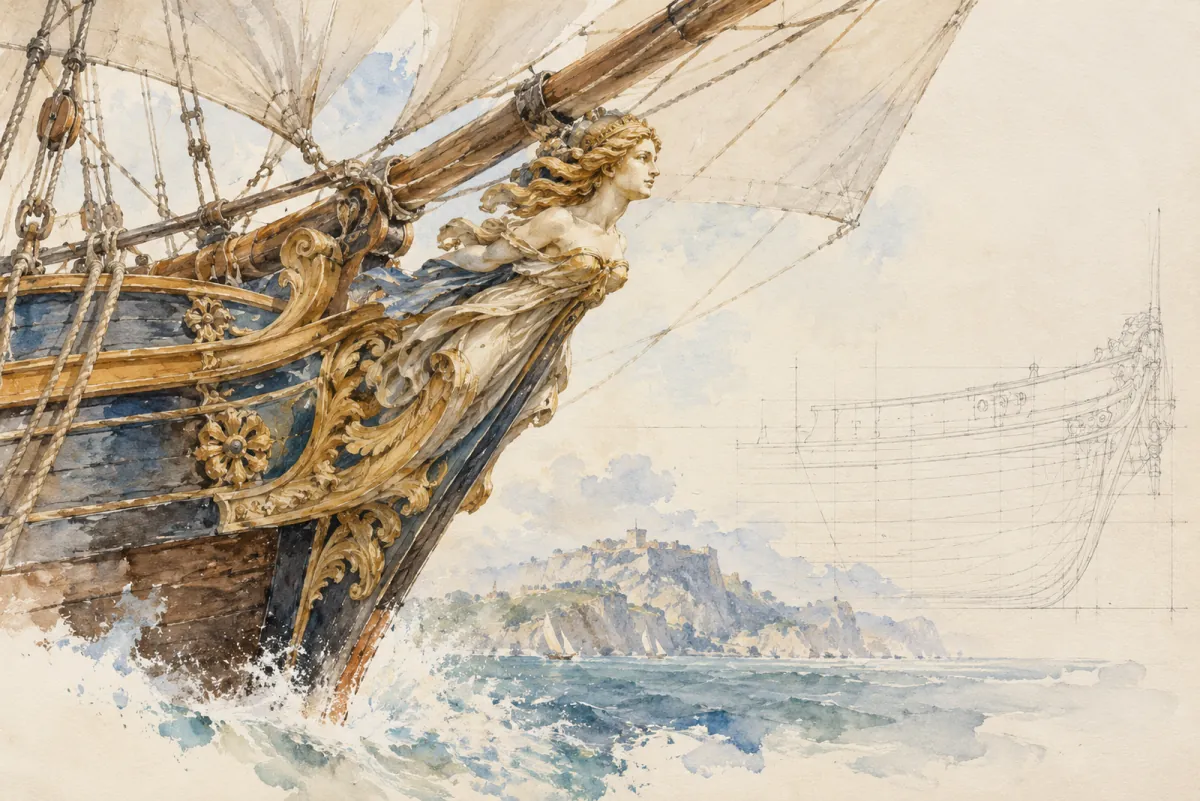
Proues is attributed to Philippe Ledoux in an auction notice that associates the drawing with 1973 and records a 90-centimeter silk square.[37] The Crédit Municipal de Paris separately documents a silk-twill example titled France Proues and signed Ledoux.[38] Its colors include gold, yellow, brown and white against green.[38]
The Crédit Municipal description is especially useful for distinguishing title variants.[38] In its fuller account, the cartouche may be left blank or carry France or Commandement en chef pour la Méditerranée.[38] These are documented inscription differences, not evidence by themselves for a chronological sequence.[38]
The same France example measures approximately 88 by 86 centimeters.[38] The variation from a nominal 90-centimeter square is an object measurement and does not establish a separate named format.[37][38] A specialist description connects the subject to decorated ships’ bows and credits Ledoux.[39]
The specialist gives 1973 as the original motif’s year, while the auction notice also associates that year with the design.[37][39] Neither consulted description supplies an original Hermès release document or dates the successive cartouche forms.[37][38][39] The useful distinction is therefore between the documented maritime subject and inscriptions on one hand and their still incomplete production history on the other.[37][38][39]
Still open: The inaugural edition and the order of the cartouche variants remain unconfirmed. The exact ships or historical carvings used as models are not established. No complete reissue or format chronology was found.
Sources and limits
- Armeria, lot 1 · Gros & Delettrez2009-06-09
- Catalogue, lot 123 · Gros & Delettrez2023-06-06
- Armeria, lot 73 · Il Ponte, Drouot2026-10-27
- Armeria, lot 62 · Gazette Drouot
- Attelage en arbalète, lot 156 · Paris Ouest Enchères via Drouot
- Catalogue, lot 109 · Élysée2026-04
- Vintage Fashion, lot 244 · Bolaffi
- Affiche, lot 537 A · Artcurial
- Avenue des acacias, 3342666 · Skånes Auktionsverk, Auctionet
- Vintage Fashion 456, lot 340 · Bolaffi
- Vente 277 · Auctie’s, Marcilhac Expert2025-04-08
- Avenue des acacias · EncherExpert
- Vintage Fashion 769, lot 11 · Bolaffi
- Vente 352, lot 412 · Cambi
- Carrick à pompe · Fifth Main
- Carrick à pompe · Bijoux Occasions
- Catalogue, lot 1229 · Couton Veyrac Jamault2013-06
- Résultats, lot 171 · Catalogue de vente du 28 juin 20242024-06-28
- Maroquinerie de luxe, lot 20 · Gazette Drouot2020-02-08
- Mode, lot A026 · Gazette Drouot2013-04-03
- Collections & successions, lot 422 · Millon
- Grantham Collective Sale, lot 10 · Golding Young
- Catalogue, lot 1630 · Van Zadelhoff2024-12-17
- Catalogue du 11 avril 2026, lot 149 · Crédit Municipal de Paris2026-04-11
- Catalogue, lot 265 · Blanchet2025-05
- La chasse à tir by P. Ledoux · 1stDibs; Dressing Factory
- Vintage Fashion, lot 388 · Bolaffi
- La comédie italienne Jacquard 90 · Abigail Goodman
- La Comedie Italienne by Philippe Ledoux · Passion for Elegance2016-11-10
- La Promenade de Longchamps, lot 682 · Leland Little2013-09-13
- La promenade de Longchamps, lot 25 · Alexandre Landre
- Carré en twill de soie · Crédit Municipal de Paris2020-03-14
- La Promenade de Longchamps · Auctionet
- Promenades de Paris, lot 201 · Bonhams via Gazette Drouot
- Promenades de Paris · Dorotheum2019-10-01
- Catalogue, lot 59 · Fraysse2025-10-15
- Proues, lot 302 · Gazette Drouot
- Résultats du 25 mai 2024, lot 131 · Crédit Municipal de Paris2024-05-25
- Proues 90 · Abigail Goodman
Separate catalogues do not always prove independent dating. A date given for a design is not assumed to be its first edition unless a source says so.