

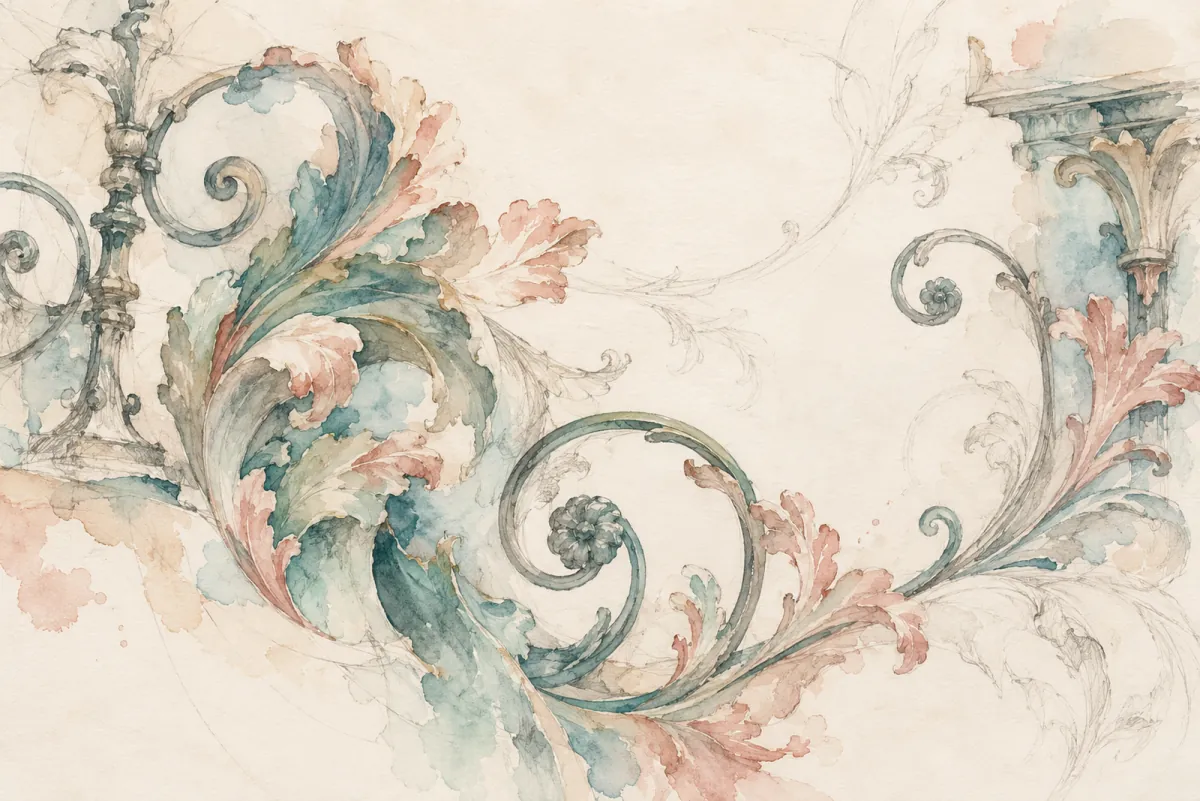
Arabesques
Ruellan attributes Arabesques to Henri d’Origny and associates the design with 1963.[1] Its 90-centimeter silk square combines flowers and ornamental cords in green and blue.[1]
Rossini instead explicitly places the first edition in 1964 and reports a reissue in 1980.[2] Its example is a 90-centimeter square in pink, green and cream.[2] The two catalogues therefore agree on the artist while disagreeing on the early date.[1][2]
Skånes Auktionsverk also uses 1963 for an example measuring 89 by 88 centimeters.[3] A Mehlis catalogue describes a much larger silk square, approximately 130 centimeters across, with black-and-gold scrolls and a central floral star.[4]
These records document variation in scale and color without establishing how the larger textile relates chronologically to the 90-centimeter design.[1][2][3][4] The explicit first-edition statement of 1964 is retained with its conflict, rather than treated as an uncontested date.[1][2][3]
Still open: The exact printed signature and inaugural release remain unconfirmed. The consulted records do not establish a complete reissue history or a documented annual-theme connection.
Cheval fleuri
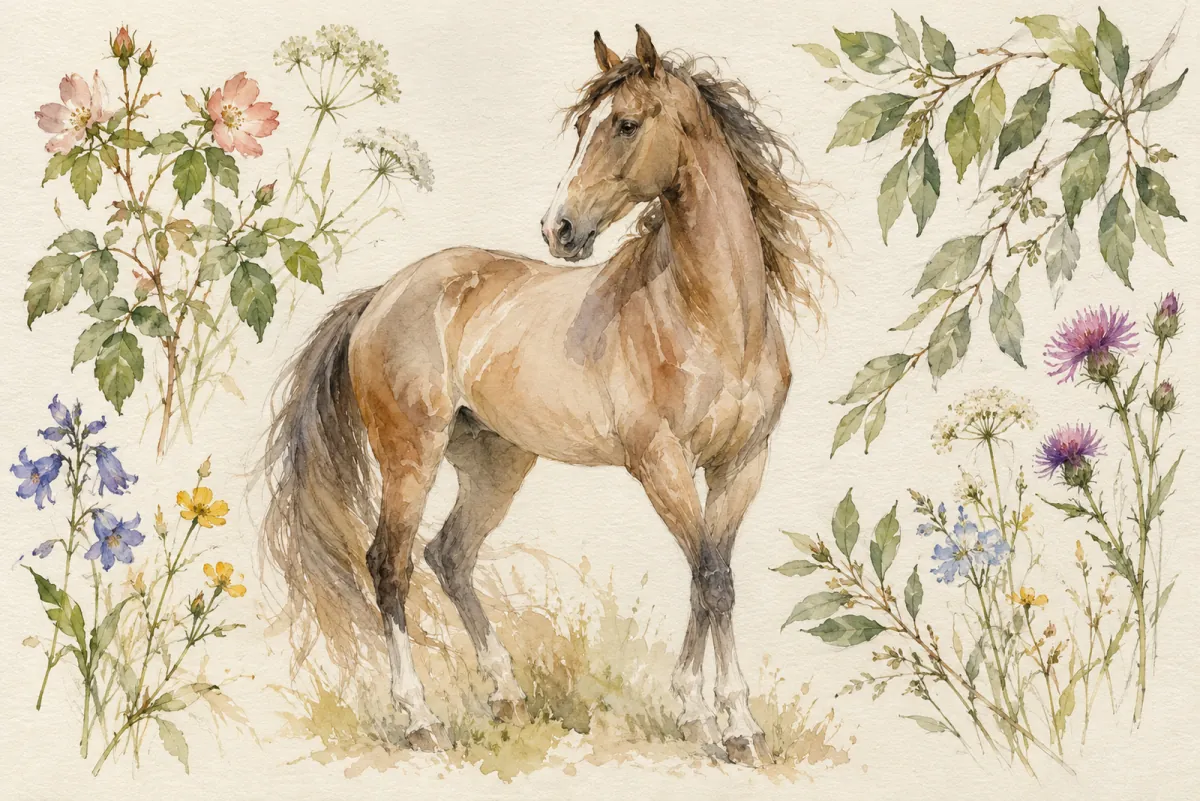
Cheval fleuri is attributed to Henri d’Origny by Case Auctions.[5] Its description identifies a horse, rider and bird rendered in colorful floral forms against gray, surrounded by a floral border.[5] The silk-twill example measures approximately 35 inches square.[5]
Case identifies that object as a Fall-Winter 1990/91 reissue after a 1964 design.[5] Another auction catalogue instead records an edition in 1962 and a reissue in 1990 for a cream-and-orange 90-centimeter square.[6]
The disagreement now exists between auction catalogues, not merely between dealers.[5][6] It cannot be resolved by counting how often either date is repeated.[5][6] The inaugural-year field therefore remains open.[5][6]
Both records support the artist, silk-square format and a later edition around 1990.[5][6] The exact first-year chronology and the assignment of individual colors to particular editions require a stronger release source.[5][6]
Still open: The exact printed signature and inaugural release remain unconfirmed. The consulted records do not establish a complete reissue history or a documented annual-theme connection.
Citroën
An Auctie’s catalogue hosted by Marcilhac Expert identifies Citroën as a silk-twill square after a drawing by Henri d’Origny.[7] It records dimensions of 90 by 90 centimeters.[7]
Le Grenier d’Amatxi describes another silk-twill example in the same size, combining white, red, blue and gray.[8] The dealer spells the designer’s given name Henry, while the auction catalogue uses Henri.[7][8]
The specialist dates the scarf to 1973 and describes it as a special tribute to André Citroën.[8] That account is useful as an attributed interpretation, but it does not reproduce a commission document or a contemporary announcement.[8]
The independent catalogue supports the title, designer and format.[7] It does not establish the tribute’s circumstances or supply a production quantity, so those details cannot be expanded beyond the specialist’s account.[7][8]
Still open: The exact printed signature and inaugural release remain unconfirmed. The consulted records do not establish a complete reissue history or a documented annual-theme connection.
Projets carrés
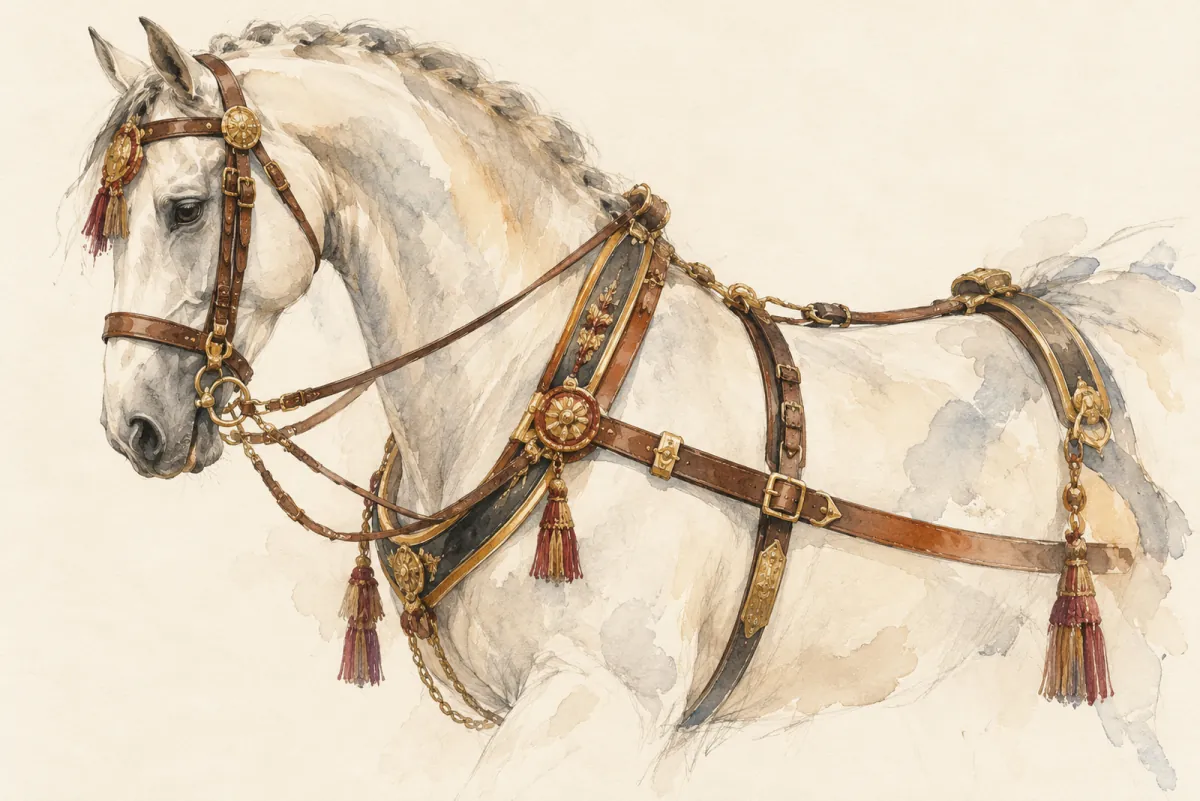
Projets carrés is attributed to Henri d’Origny by Chiswick, which associates the design with 2007 and describes equestrian motifs on a moss-green ground.[9] The recorded silk square measures 90 centimeters.[9] Bolaffi independently lists a 90-centimeter silk example under the same title, artist and year.[11]
A Crédit Municipal de Paris catalogue supplies a more detailed account of the source material.[10] It states that in 2004 d’Origny arranged equestrian pieces from the Conservatoire des Créations and the Émile Hermès museum for a photograph.[10] Bronze stirrups, English bits, spurs and fly-whisks form the described composition.[10]
The same auction entry concerns a silk-twill poncho, approximately 140 centimeters square, whose opening and leather tab transform the larger textile into a garment.[10] Its steel-blue, brown and orange example is described separately from the 90-centimeter squares.[9][10] The catalogue reports a square edition in 2020 followed by the poncho.[10]
A dealer distinguishes Projets carrés from a related version titled Projets carrés au crayon.[12] That distinction cautions against automatically assigning every later description to an unchanged reissue of the 2007 square.[9][10][12] The records establish related equestrian designs and formats, but a house catalogue is still needed to map their exact relationships.[9][10][12]
Still open: The exact printed signature and inaugural release remain unconfirmed. The consulted records do not establish a complete reissue history or a documented annual-theme connection.
Sources and limits
- Arabesques, lot 245 · Ruellan
- Arabesques, lot 331 · Rossini
- Arabesques, 3342120 · Skånes Auktionsverk, Auctionet2024-03-02
- Arabesques, lot 947 · Mehlis, Very Important Lot2023-08-24
- Three scarves, lot 707 · Case Auctions2020-01
- Catalogue, lot 411 · Catalogue diffusé par Interenchères2024-11
- Vente 277 · Auctie’s, Marcilhac Expert2025-04-08
- Citroën, édition spéciale · Le Grenier d’Amatxi
- Projets carrés, lot 351 · Chiswick Auctions2019-05-15
- Catalogue, lot 86 · Crédit Municipal de Paris2026-04-11
- Vintage Fashion, lot 247 · Bolaffi
- Projets carrés · Carré Society
Separate catalogues do not always prove independent dating. A date given for a design is not assumed to be its first edition unless a source says so.