

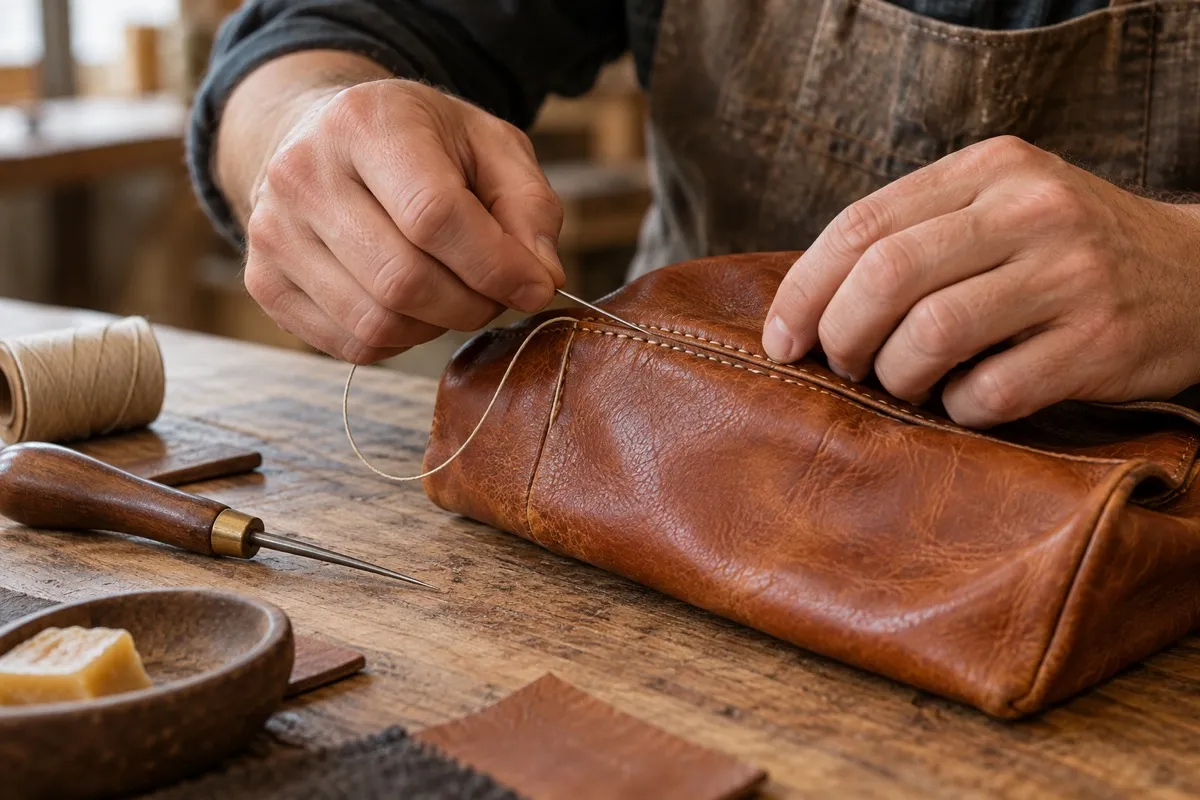
The first mark on a much-loved object can feel out of proportion to its size. A small scuff suddenly occupies all our attention. Later, we may struggle to remember when it happened. Living with things involves this adjustment: learning what to notice, what to accept and when to ask for help. Repair belongs to that ordinary life, not only to dramatic rescues.
Hermès presents maintenance and repair across a broad range of objects, including leather goods, watches, jewelry, clothing, accessories and pieces for the home. Its examples include replacing a bag zipper and mending a purse seam. These are examples of work the house describes, not promises about what can be done to every individual object.[1]
Begin with the object in front of you
Before deciding on a treatment, decide what you are trying to achieve. Is a fastening no longer usable? Has a seam opened? Are you worried about a change in the surface, or mainly hoping for a fresher appearance? Those questions lead to different conversations. “Make it new again” can hide several wishes that a repairer needs you to separate.
Hermès’s repair FAQ directs owners to a store for examination, followed by an estimate and a time frame. Treat that assessment as the beginning of the answer. Confirm the proposed work, price, timing and likely result for your particular piece; a service description or another owner’s experience cannot settle those details in advance.[3]
It is helpful to bring what you know: earlier repairs, cleaning products used, a recent accident, or an uncertainty about the material. Take dated photographs before handing the object over and keep a copy of the agreed work. These are simple record-keeping suggestions, not an official intake checklist. Their purpose is to make the conversation clearer for everyone.
Everyday care can be quite undramatic
For its leather objects, Hermès advises protection from prolonged strong light and heat and warns about water, oils, ink and perfume. If water reaches the leather, its guidance is to wipe it promptly with a soft, lint-free cloth. It also cautions that repeated contact with dark or raw textiles may mark lighter leather.[2]
When the object is resting, the house recommends a dry, temperate place away from light, with its box or dust cover and appropriate support for the shape. Avoid overloading it. Hermès advises against commercial leather-care products and anti-humidity sachets. Before trying a household remedy or a product recommended for a different leather, ask for advice about the actual piece.[2]
A small routine is easier to keep than a grand resolution. Empty a bag when you put it away. Notice a loose thread before absent-mindedly pulling it. Put service papers somewhere you can find them. Care need not become a second occupation and an object does not have to spend its whole life waiting for a special enough occasion.
Keeping age, addressing damage
How much visible change feels right is partly a personal question. You may enjoy a softened shape but dislike a stain; someone else may feel differently. Describe the features you want to keep as well as those that trouble you. Do not assume that every trace of use is desirable patina, or that a change in appearance necessarily calls for intervention.
There is a further distinction when an object is fragile or historically important. The Canadian Conservation Institute notes that species, processing and finishing affect the characteristics and condition of leather. Museum guidance addresses preservation of collections, which is a different context from preparing a bag for everyday use. An old piece with uncertain condition may need a specialist conversation before a cosmetic one.[4]
You can ask the repairer which parts would be retained, which might be replaced and what could remain visible afterwards. Ask whether the proposed work suits your intended use. A clear limit can be valuable information. It is better to understand an outcome you may find modest than to agree to work on the strength of an imagined transformation.
After the work
When the object returns, keep the service record with its history and photograph any changes you want to document. Follow the care instructions given for the completed work. If an agreed repair is unclear, ask before making assumptions. The story does not need to become a perfect before-and-after image to be worth keeping.
A longer life is made of particular decisions: using something, setting it aside, seeking an assessment, accepting a limitation. None offers a guarantee of permanence. Together they offer a more attentive way to own things. The aim can be pleasantly modest: an object that works for you again, with enough of its familiar character to feel like yours.
Sources & further reading
- Maintenance & Repair · HermèsLeather through Accessories, lines 8–29Consulted 2026-10-27
- Leather Care Instructions · HermèsProtect it from bad weather; Keep it away from bad influences, lines 12–17 · Keep it away from bad influences; Offer it frequent holidays; Give it the attention it deserves, lines 17–24Consulted 2026-10-27
- Care and repair FAQ · Hermès SingaporeHow do I repair an Hermès item?, lines 50–53Consulted 2026-10-27
- Caring for leather, skin and fur · Canadian Conservation Institute, Government of CanadaUnderstanding leather, skin and fur, lines 84–86; introductory scope, line 26Consulted 2026-10-27