
An object can invite affection before we know anything about its making. A line catches the eye. A color feels unexpectedly right. Learning how it took shape offers another way to enjoy it: looking beyond the finished surface to the decisions that made that surface possible. The aim is to notice more, without turning craftsmanship into a list of impressive numbers.
In a studio visit published by Vogue, Priscila Alexandre Spring introduced herself as the leather goods creative director at Hermès. Her account follows a design from sketches to three-dimensional maquettes before a leather version. These are distinct stages of development: the first drawing is the beginning of a conversation about an object, rather than its final instruction sheet.
A Day in the Life of Hermès’s Leather Goods Creative Director · Transcript, lines 134–142
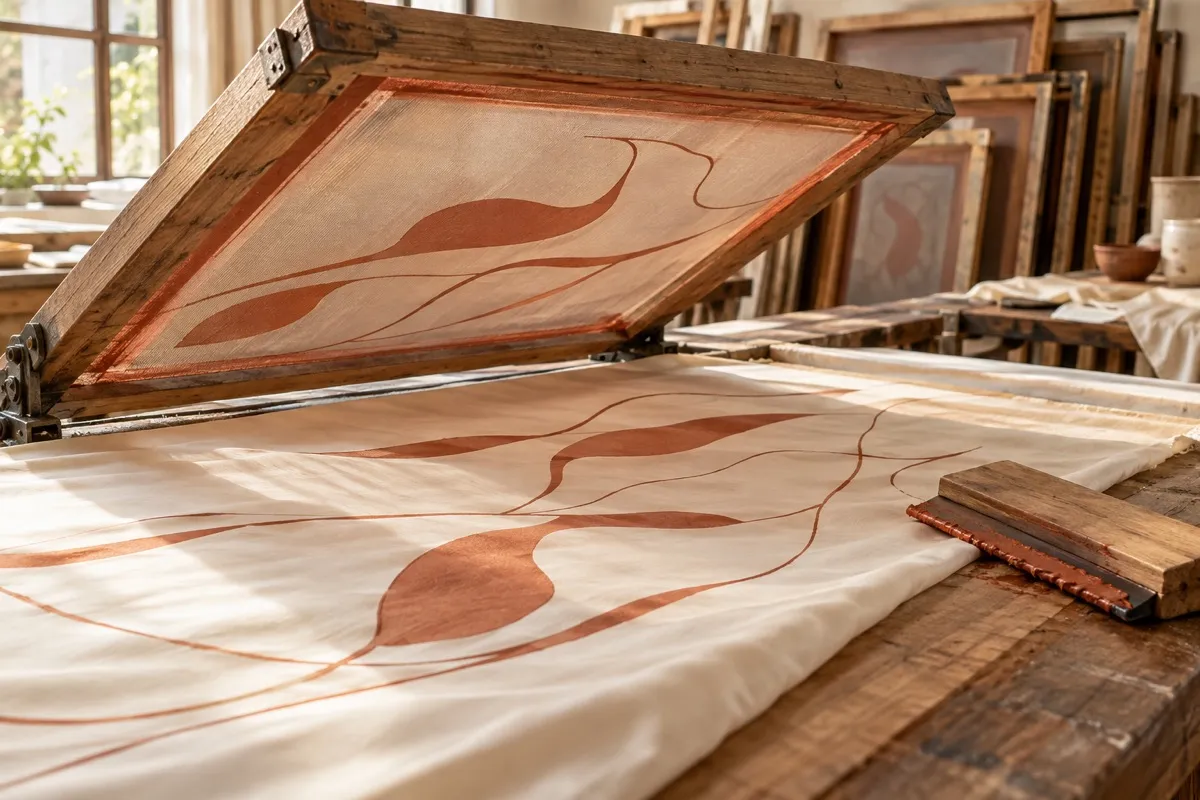
For silk, the house describes another translation. A scarf drawing is separated into color-specific files and printing screens. Its account of silk printing follows successive screens on silk twill, then steaming, washing, finishing and hand-rolled hems. Reading that sequence gives the eye several places to pause: the drawing, the meeting of colors and the edge that completes the piece.
Hermès in the Making in Istanbul · Silk printing section, lines 35–38
These descriptions are useful because they name actions. They let a collector ask a better question than whether an object is simply handmade. Which stage is being discussed? Is a statement about drawing, printing, stitching or finishing? A precise answer makes room for several kinds of skill without suggesting that every operation on every product is performed in the same way.
The leatherworking account describes a saddle stitch made with both ends of one waxed linen thread. That is a specific explanation of a technique. It does not establish that every seam on every Hermès object is hand sewn. Appreciating a gesture does not require enlarging its claim.
Hermès in the Making in Istanbul · Leather working section, line 59
Training deserves the same care. The Hermès school advertises a printing route with six months of preparation followed by twelve months preparing for an industrial screen-printing CAP. That course structure is a route towards a qualification, not a universal stopwatch for mastering every printing technique. A course length and a lifetime of practice answer different questions.
Formation imprimeur · Duration section, line 17
For a collector, the pleasure is in connecting these details to something already loved. Look again at the border of a scarf. Consider how a flat drawing becomes a form that can be held. Choose one gesture to understand instead of trying to memorize an entire production story. Curiosity can deepen attachment without requiring expert vocabulary.
The Vogue visit is a good next step for following the conversation between an idea and a model. The house’s account of silk offers a parallel route through another material. Neither needs to be reduced to a single number of hours. What matters here is the sequence of choices, the people making them and the care with which we describe their work.
Hermès in the Making in Istanbul · Silk printing section, lines 35–38
A Day in the Life of Hermès’s Leather Goods Creative Director · Transcript, lines 134–142