
Candidate catalogue entry
Les Voitures Nouvelles
Title: Candidate · not independently reviewedJacques Eudel
Artist credit: Candidate · not independently reviewed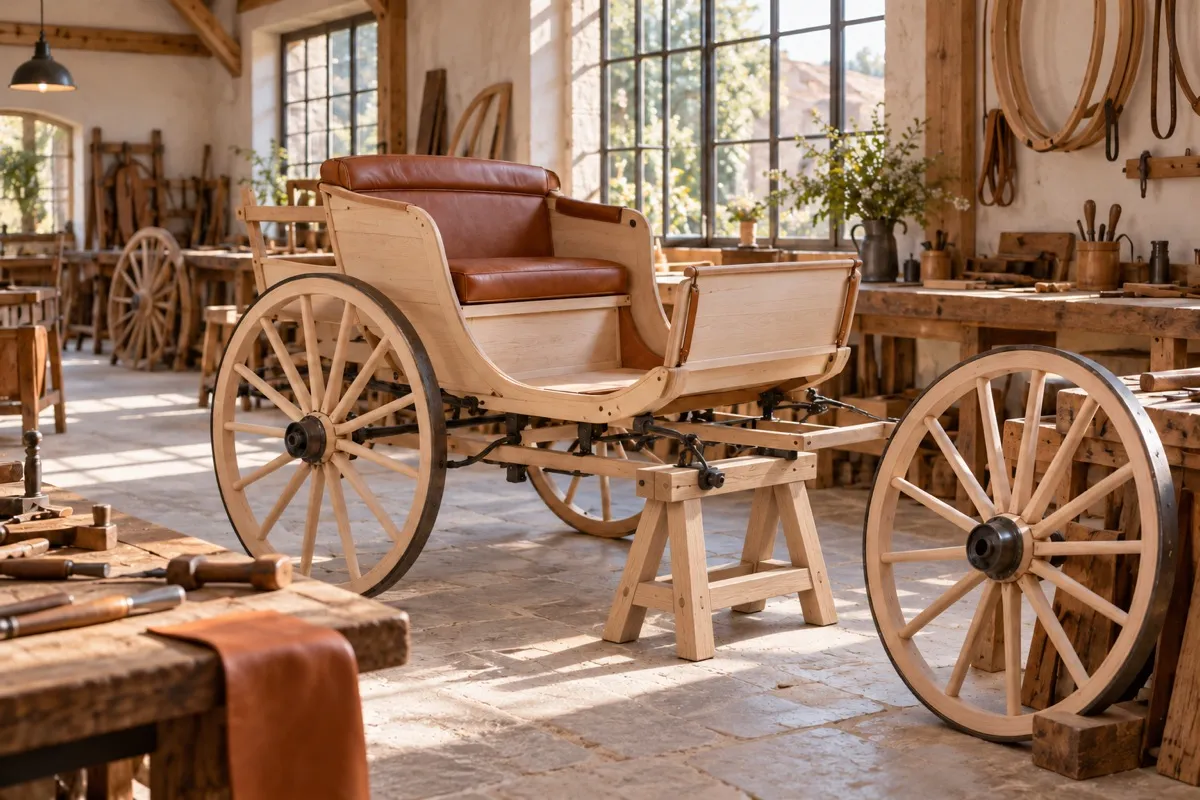
The inherited pilot metadata remains provisional. The separately reviewed note below does not promote the catalogue record or establish a first-edition year.
Brief creation story
The story, in brief
This note has its own sources and limits. The inherited catalogue metadata elsewhere on this page remains provisional.
Les Voitures Nouvelles offers a journey through the carriage rather than a journey by carriage. In the account attached to a 70-format version, Hermès names open carriages, coupes, sedans and high-set phaetons, arranged in central and crest-like settings. Jacques Eudel receives the designer credit. The house’s emphasis is on the vehicles themselves and on the craftsmanship associated with their construction.[1]
The inspected product is explicitly presented as based on the Les Voitures Nouvelles scarf design. It is a hand-rolled silk scarf made in France, reference H984108S 06, with listed dimensions of 66 by 66 centimeters. Hermès notes that hand-rolled dimensions may vary. The commercial format name, scarf 70, should therefore not be mistaken for an exact measurement of every example.[1]
Read as a small gathering of vehicles, the subject rewards curiosity about shapes and uses. Travel becomes something to contemplate at rest: the promise of movement held within a piece of cloth.
First-edition year: not established by these sources.
Sources and limits of this note
- Les Voitures Nouvelles scarf 70 · HermèsProduct description lines 34–44; The story behind lines 76–78; reference H984108S 06 · The story behind, lines 76–78 · Product description, lines 34–44 · The story behind, line 77
Evidence details and uncertainties
- artist · supported
- Jacques EudeldesignLes Voitures Nouvelles scarf 70, Product description lines 34–44; The story behind lines 76–78; reference H984108S 06
- described subject · supported
- Carriages including coupes, sedans and phaetons; central and crest settingsproduct:H984108S 06 story of source designLes Voitures Nouvelles scarf 70, The story behind, lines 76–78
- documented version · supported
- H984108S 06: scarf 70; silk; hand-rolled; France; listed 66 × 66 cm, variable hand-rolled dimensionsproduct:H984108S 06Les Voitures Nouvelles scarf 70, Product description, lines 34–44
- relationship to source · supported
- Product described as based on the scarf designproduct:H984108S 06Les Voitures Nouvelles scarf 70, The story behind, line 77
- first edition year · unknown
- Unknownexisting_entity
What is documented
- Title
- Les Voitures Nouvelles Candidate · not independently reviewed
- Artist credit
- Jacques Eudel Candidate · not independently reviewed
- First edition
- Unknown Unknown
Reviewed product variants
No product variant is established in the reviewed sample for this entry.
Discover the artist
Jacques Eudel Candidate · not independently reviewed association
Documentary context
For context, the National Gallery describes the phaeton as a high-built open carriage whose light body and large wheels suited recreational driving and racing.
The museum’s painting is not proposed as Eudel’s source; no shared historical model or artist attribution inferred.
- A Gentleman driving a Lady in a Phaeton · National Gallery, London
About the work lines 103–109; inventory NG3529 lines 140–141
This narrowly scoped reference does not establish an independent history of this design or its first edition. Historical evidence and visual credits remain separate.