
Color masala is an Hermès silk square attributed to N. S. Harsha in the Freeman's catalogue, which records the design in the 90-centimeter format and also gives measurements of 36 inches square.[1] A specialist dealer describes a coral-colored example in silk and dates the original motif to 2008.[2] The independent auction attribution supports the artist's name and the existence of the format, although it does not supply a release year.[1]
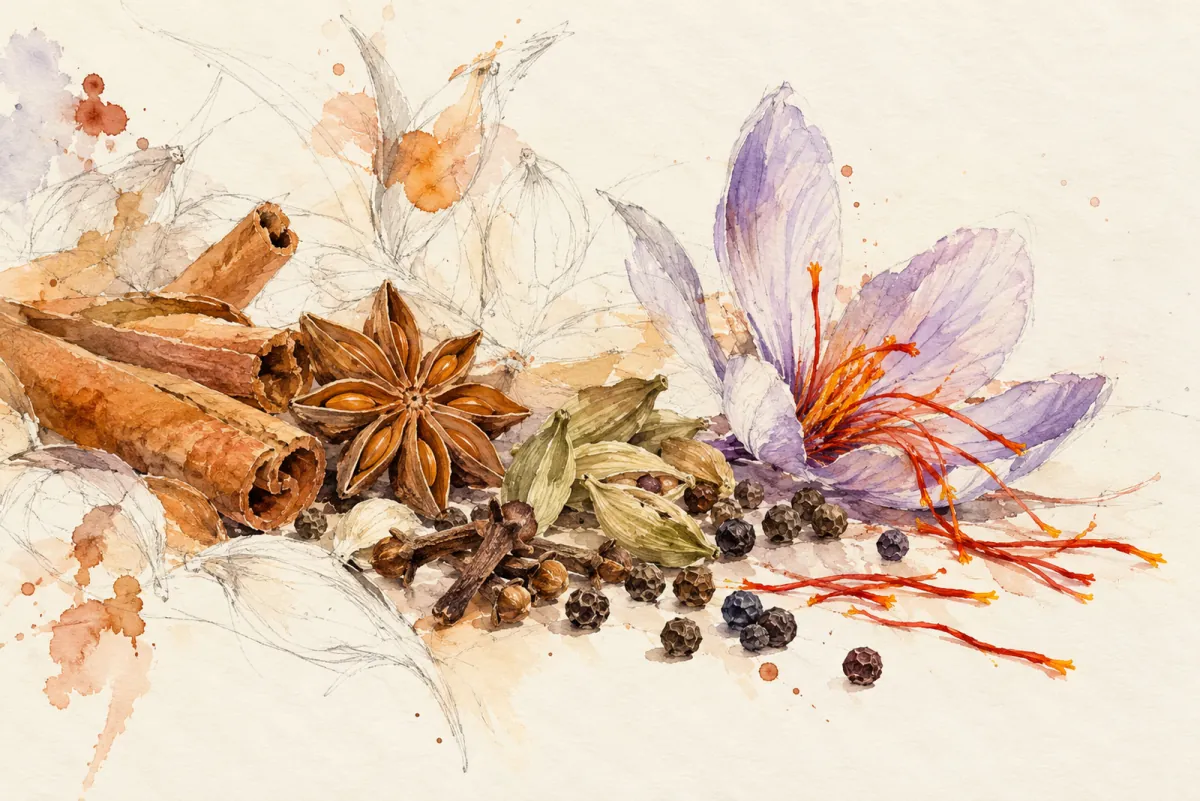
The scarf's culinary title is explained in a passage that Abigail Goodman attributes to the Hermès Spring-Summer 2008 booklet.[2] In that account, masala refers to a mixture of spices and becomes a way of thinking about a gathering of people.[2] The design is presented as a shared feast in which the guests retain their individual tastes while belonging to a larger social whole.[2] That reading gives the title a specific human subject, but the booklet passage remains a dealer transcription because an original copy was not examined.[2]
Food and individual experience also appear in Harsha's independently documented exhibition practice.[3] Hermès records his exhibition Leftovers at the Ginza Maison Hermès from June 11 to September 15, 2008.[3] Hermès identifies Harsha as born in India in 1969 and describes a practice extending from painting to installations and works made for particular sites.[3] Its account places the artist in Mysore and describes his attention to South Indian meals served on banana leaves.[3] Although the servings begin alike, what diners leave behind differs from person to person.[3] The house presents those remains as traces of individuals within a shared meal.[3] This establishes a contemporaneous relationship between Harsha and Hermès without proving that the exhibition and scarf were conceived as one project.[2][3]
The Mori Art Museum offers a further account of Leftovers in connection with its 2017 presentation.[4] Harsha worked with a company producing plastic food displays to make dishes that deliberately resembled the remains of meals.[4] The museum records the installation's materials as acrylics, plastic resin and canvas and identifies both 2008 and 2017 in its date.[4] It also draws attention to the colorful food on the leaf plates and the painted footprints on the accompanying mat.[4] These details document the artist's movement between painting and an arrangement of objects in space.[4]
Read beside this exhibition history, the scarf's attributed feast offers a focused point of comparison rather than a claim of direct derivation.[2][3][4] One source describes the guests' different tastes within a gathering; the others describe differences left by participants after a communal meal.[2][3][4] The relationship is thematic on the evidence available here, while the auction catalogue anchors Color masala as a separately documented silk object.[1][2][3][4] Neither the exhibition record nor the museum commentary identifies the scarf as a component of Leftovers; the auction record does not date its introduction.[1][3][4]
Sources and limits
- Color Masala, lot 628 · Freeman’s, sale 671
- Color Masala 90 · Abigail Goodman
- Leftovers by N. S. Harsha · Hermès, Ginza Le Forumexposition 2008-06-11 au 2008-09-15
- A Charming Journey Round the Works of N. S. Harsha #6 · Mori Art Museum2017-05-09
The exact printed signature, a primary release record and a complete colorway history remain unverified. The 2008 scarf date comes from a dealer and its attributed booklet transcription. No source consulted establishes that the scarf was commissioned for Leftovers or documents another format or reissue.